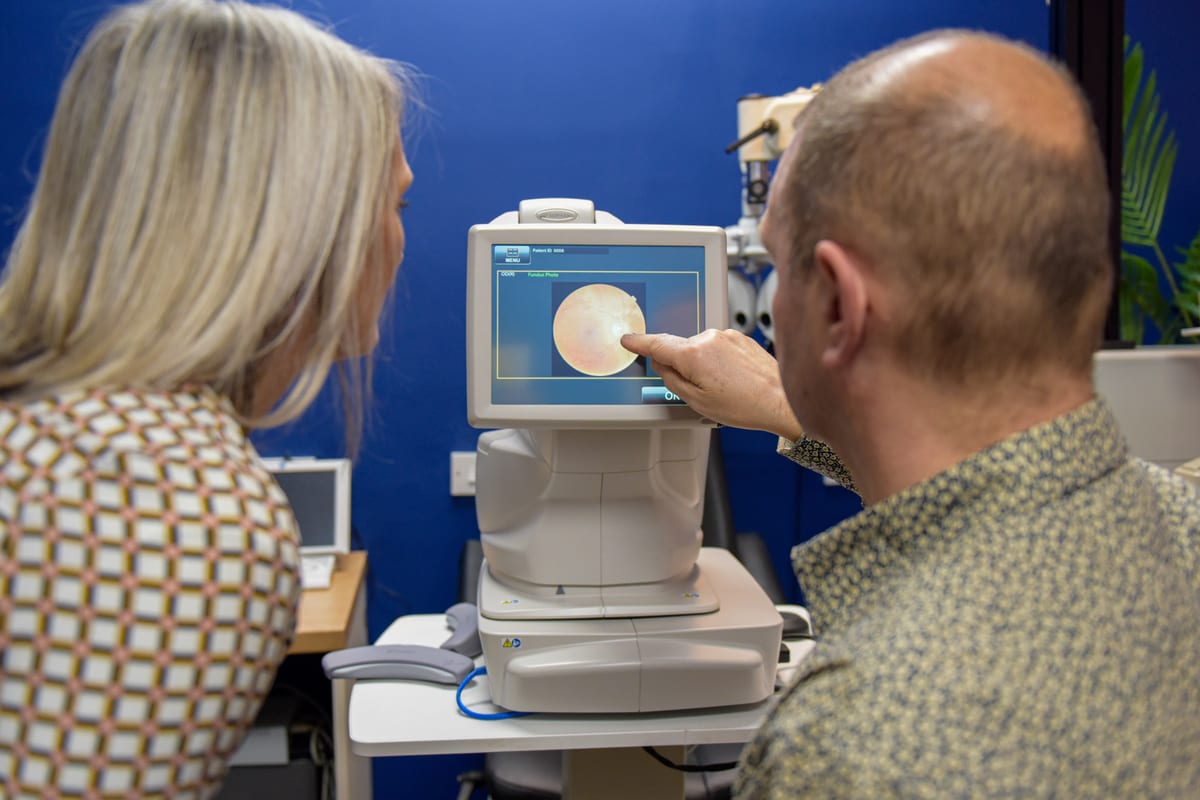
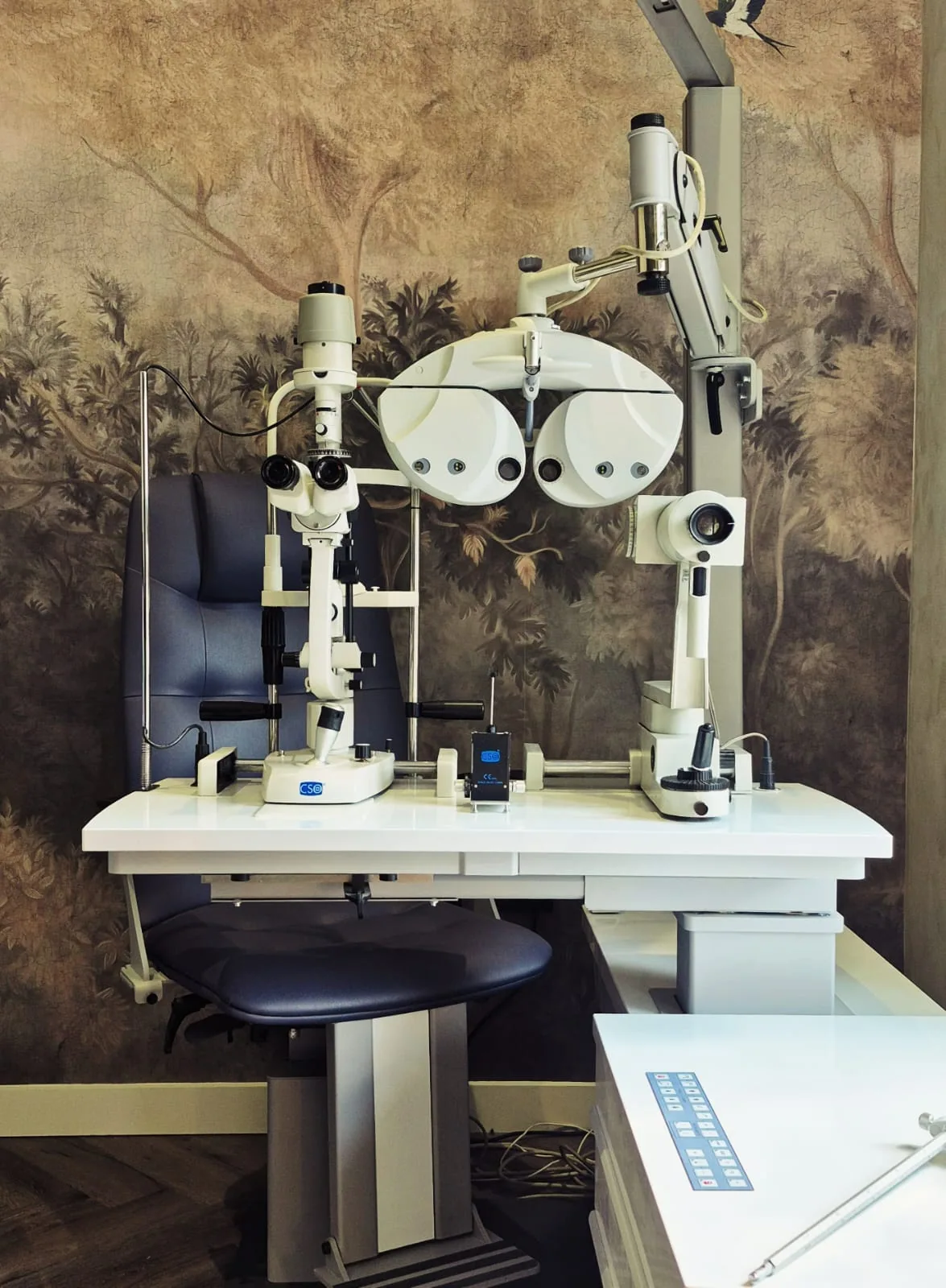
It is easy to think of an eye test as just a check on whether you need glasses. In fact it is a genuine health check — and a surprisingly powerful one. The eye is the only place in the body where a clinician can look directly at your blood vessels and a nerve, without a single cut or needle. That means a routine eye examination can pick up signs of conditions well beyond your eyes, sometimes before anything else has.
Why the eye is a window to your health
At the back of your eye, the retina carries a fine network of blood vessels and the optic nerve, all visible to us during an examination. Because these reflect what is happening in the rest of your body, changes there can be an early clue to something going on elsewhere — which is what makes an eye test such a valuable general health check.
What an eye examination can help detect
Alongside eye conditions such as glaucoma, macular degeneration and cataract, a thorough examination can reveal signs of:
- Diabetes — damage to the retinal blood vessels (diabetic retinopathy) is sometimes spotted at an eye test before a diagnosis is made
- High blood pressure — narrowing, nipping or bleeding in the retinal vessels can point to hypertension
- High cholesterol — certain deposits in and around the eye can hint at raised cholesterol
- Raised pressure in the brain — swelling of the optic nerve can signal a serious problem needing urgent referral
- Neurological conditions — inflammation of the optic nerve can be an early sign of multiple sclerosis, and some strokes affect vision
- Certain tumours — rarely, signs in or behind the eye prompt further investigation
We do not diagnose these conditions ourselves — but we can detect the signs, explain what we have found, and refer you to your GP or a specialist so it can be investigated properly.
How advanced imaging helps
OCT scanning and retinal photography let us see beneath the surface of the retina and keep a detailed baseline to compare against over the years. That makes it much easier to spot subtle change early — which is often when conditions are most treatable. You can read more about what an OCT scan reveals, or explore our advanced eye health assessment.
What this means for you
Even if your vision feels perfect, a regular eye examination is worth having — because many of the conditions it can flag have no early symptoms of their own, and are far more manageable when caught early. It is one of the simplest health checks you can do.
When to book sooner
Do not wait for your next routine test if you notice a sudden change in your vision, new floaters or flashes, distortion, double vision, or persistent headaches with visual symptoms — and if you are diabetic, keep up with your retinal screening. A sudden loss of vision should always be treated as urgent.
Even with perfect vision, an eye test is a genuine health check — the one place a clinician can see your blood vessels directly, and sometimes the first place a wider problem shows up.← Back to the Journal