
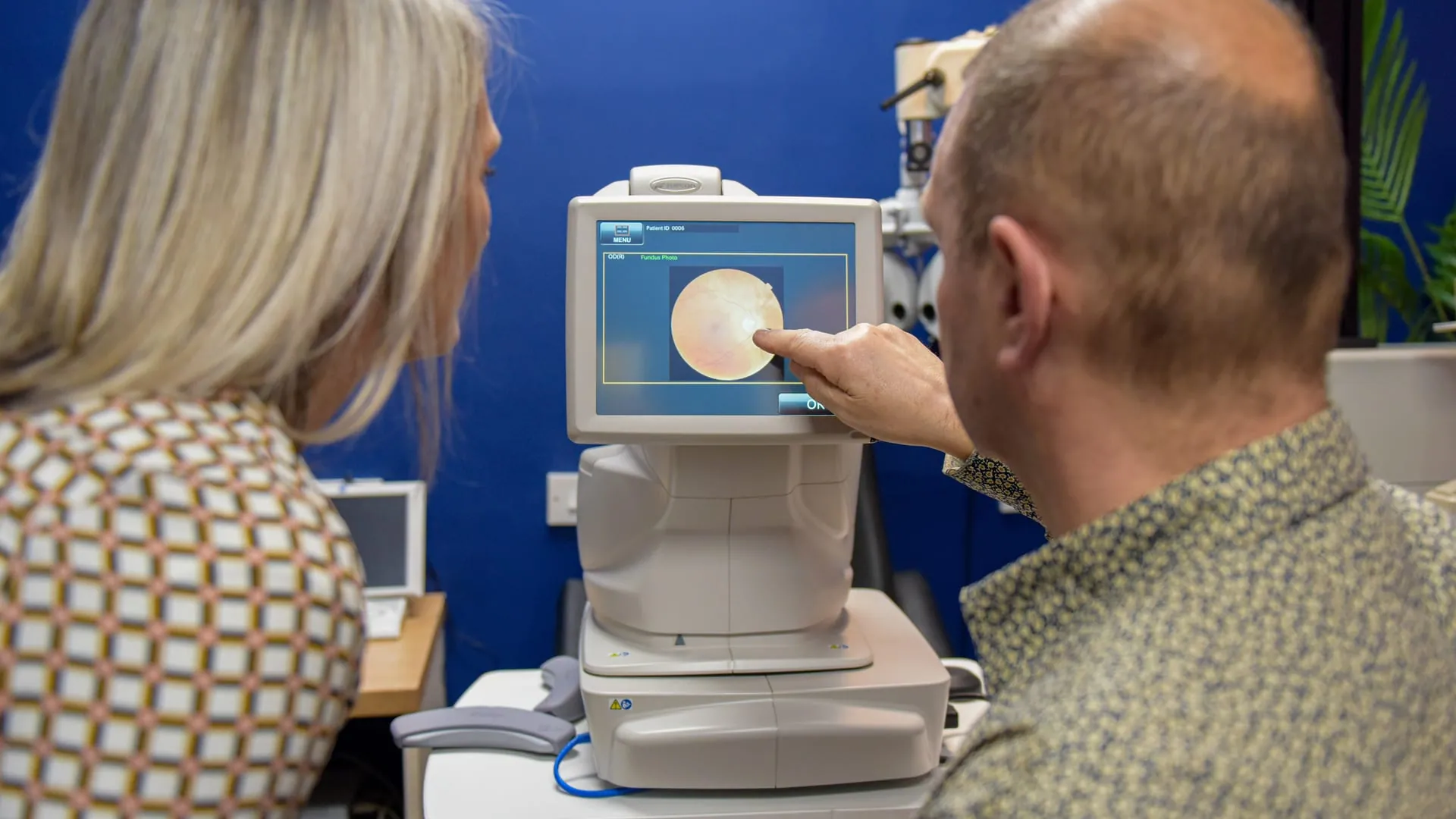
This is one of the most important things to understand about your eyes: the most common form of glaucoma has no early warning signs at all. There is no pain, no blur, nothing you would notice — which is exactly why it is usually found at a routine eye test rather than because someone felt something was wrong. Understanding that is the single best protection against it.
What is glaucoma?
Glaucoma is damage to the optic nerve — the cable that carries vision from the eye to the brain — usually linked to the pressure inside the eye. It typically affects your peripheral (side) vision first, and the damage it causes is permanent. The reason it is still so treatable is that catching it early lets us protect the sight you have.
Why it usually has no early symptoms
The common type, chronic open-angle glaucoma, is painless and gradual. Peripheral vision is lost so slowly, and the brain fills in the gaps so effectively, that most people simply do not notice until a significant amount of nerve has already been damaged. That is why it is called the "silent thief of sight" — and why a regular eye test, which can detect it long before you would, is so important.
The one type that is an emergency
There is a rarer form — acute angle-closure glaucoma — that is very different and does cause sudden, obvious symptoms: severe eye pain, a red eye, headache, blurred vision, halos around lights, and sometimes nausea or vomiting. This is a medical emergency. If this happens, seek urgent care immediately rather than waiting.
Who is most at risk?
Glaucoma can affect anyone, but some people are at higher risk:
- Age — the risk rises as you get older, particularly from your 40s onwards
- A close family history of glaucoma
- African-Caribbean or South Asian heritage (a higher risk of certain types)
- Being very short-sighted (open-angle) or long-sighted (angle-closure)
- Diabetes, or long-term use of steroid medication
- Raised pressure inside the eye
If you are over 40 and have a parent, brother or sister with glaucoma, you are entitled to a free NHS eye test — it is well worth taking up.
How an eye test detects it
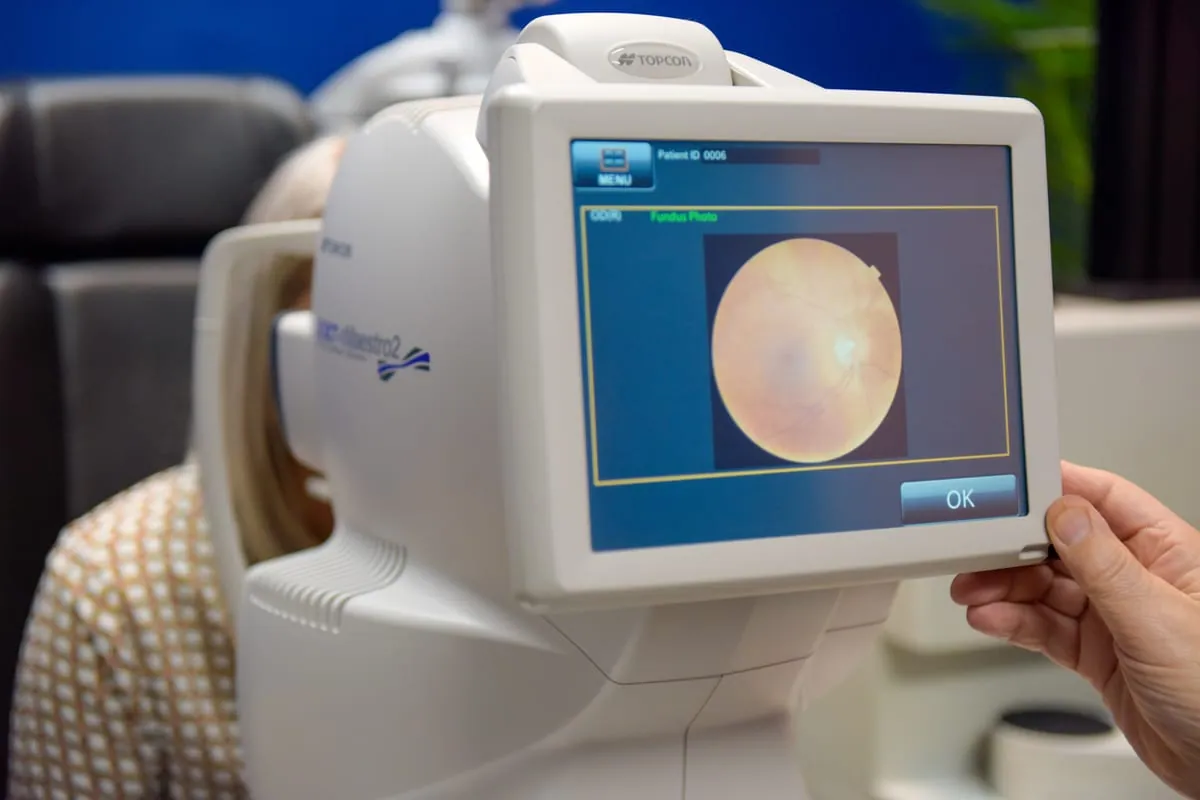
A thorough eye examination checks the pressure in your eye, examines the optic nerve directly, and tests your peripheral vision. Increasingly we also use OCT scanning to measure the nerve fibre layer in fine detail — see what an OCT scan reveals — which can reveal subtle changes even earlier. Together, these catch glaucoma long before it would ever affect the vision you notice. Our advanced eye health assessment goes further still.
Can glaucoma be treated?
Yes. While the damage already done cannot be reversed, treatment — usually daily eye drops, and sometimes laser or surgery — lowers the pressure in the eye and slows or halts further loss. The earlier it is found, the more sight is preserved, and ongoing monitoring keeps it in check. This is why symptomless does not mean harmless, and why regular testing matters so much.
You cannot feel early glaucoma — which is exactly why regular eye tests matter. Found early, it is very treatable; found late, sight has already been lost.← Back to the Journal