
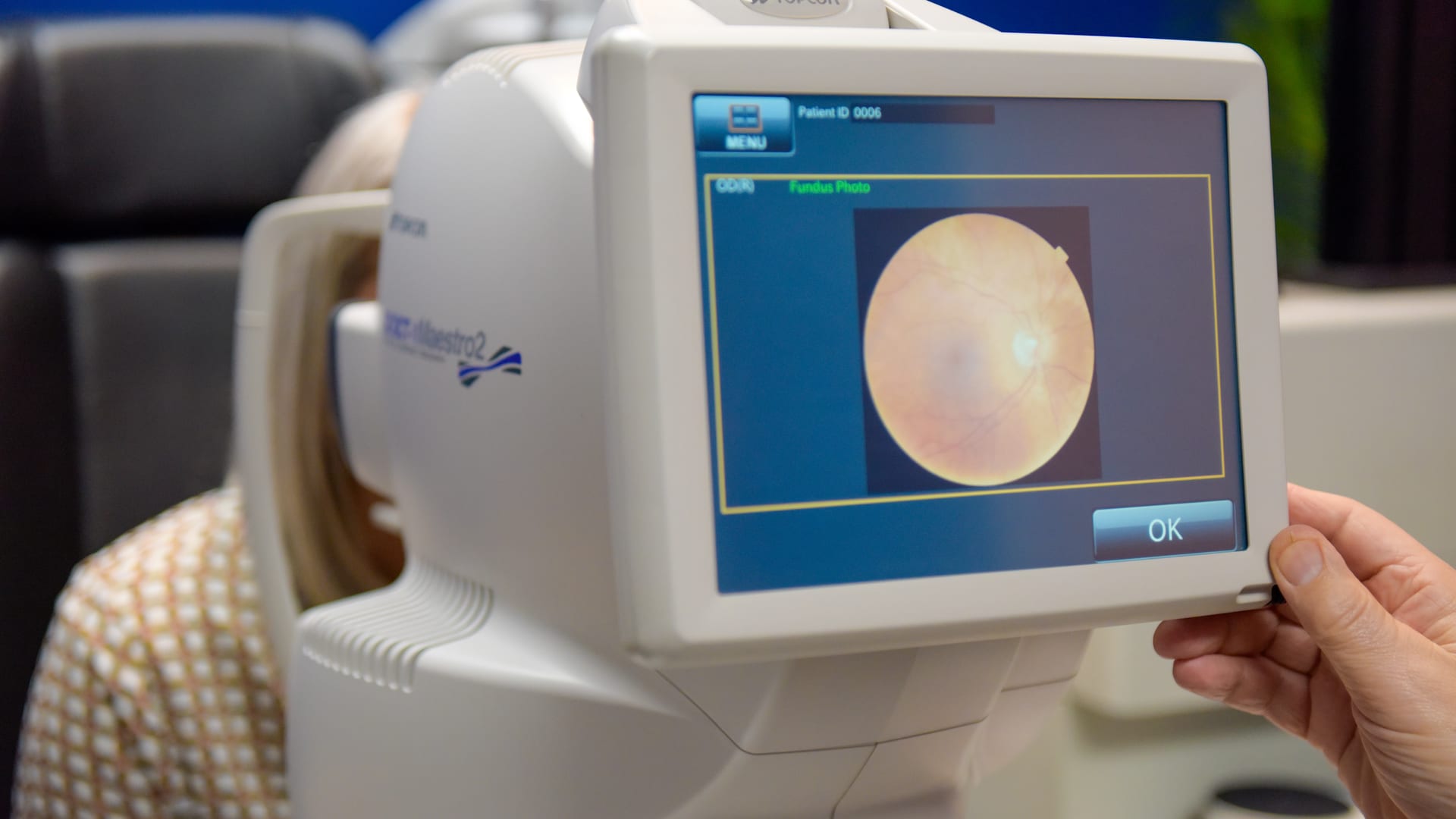
Macular Screening
A closer look at the part of your eye responsible for central vision.
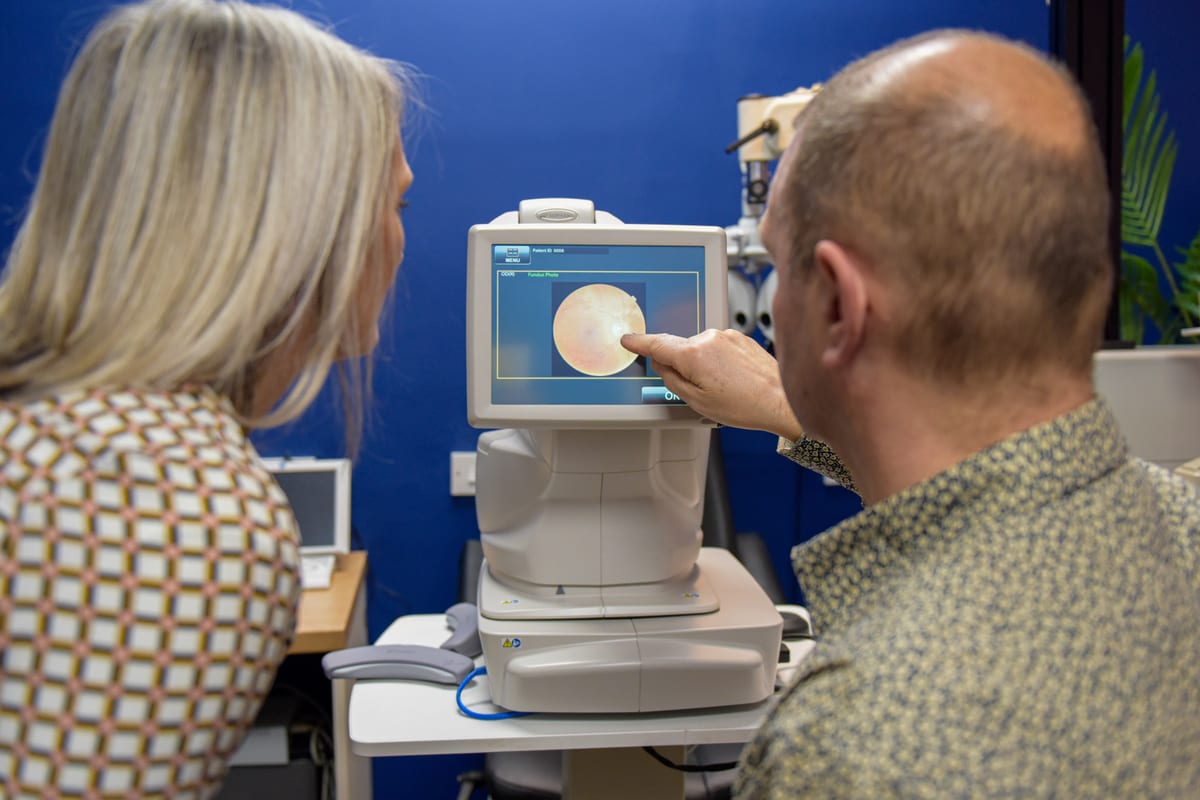
OCT imaging that looks in detail at the layers of the retina to help detect early signs of macular change — for earlier insight and clearer advice.
Your central vision
The part of your eye that sees the detail.
Your macula is the small, highly sensitive area at the back of the eye that helps you see fine detail — what you use for reading, recognising faces, seeing colour, watching television, driving and focusing on what is directly in front of you.
At STOTTS., our Macular Screening uses OCT imaging to look in detail at the layers of the retina and help detect early signs of macular change.
The aim
Earlier insight, clearer advice and more confidence in your eye health.
Why macular screening matters
Some changes develop quietly.
Macular conditions can affect your central vision — sometimes making straight lines appear distorted, letters seem missing, or faces harder to recognise. Some changes develop gradually and may not be obvious at first. OCT lets us see beneath the surface of the retina, identifying subtle changes, monitoring your macular health over time, and advising if referral or treatment is needed.
The technology
What is OCT?
OCT stands for Optical Coherence Tomography — a quick, non-invasive scan that creates a detailed cross-sectional image of the retina, including the macula.
It lets us see the layers at the back of the eye in much greater detail than a standard examination alone. The scan is comfortable, does not touch the eye, and helps us build a clearer picture of your eye health.
Is it for you?
Who should consider macular screening?
Macular screening may be especially important if you:
- Are over 50
- Have a family history of macular degeneration
- Have noticed distortion or missing areas in your vision
- Find reading or recognising faces more difficult
- Have been told you have early macular changes
- Have diabetes or other relevant health conditions
- Want greater reassurance about your eye health
You do not need symptoms to benefit from screening. In many cases, the value is in detecting change early.
Your screening
What your screening involves.
We explain what we find clearly, so you understand where you stand and what happens next.
More specialist care
Explore our other specialist services.
Specialist
Glaucoma Screening
Detailed screening to detect and monitor glaucoma early, helping protect your long-term sight.
Enquire →
Specialist
Low Vision Centre
Specialist support, aids and advice to help you make the most of your remaining vision.
Enquire →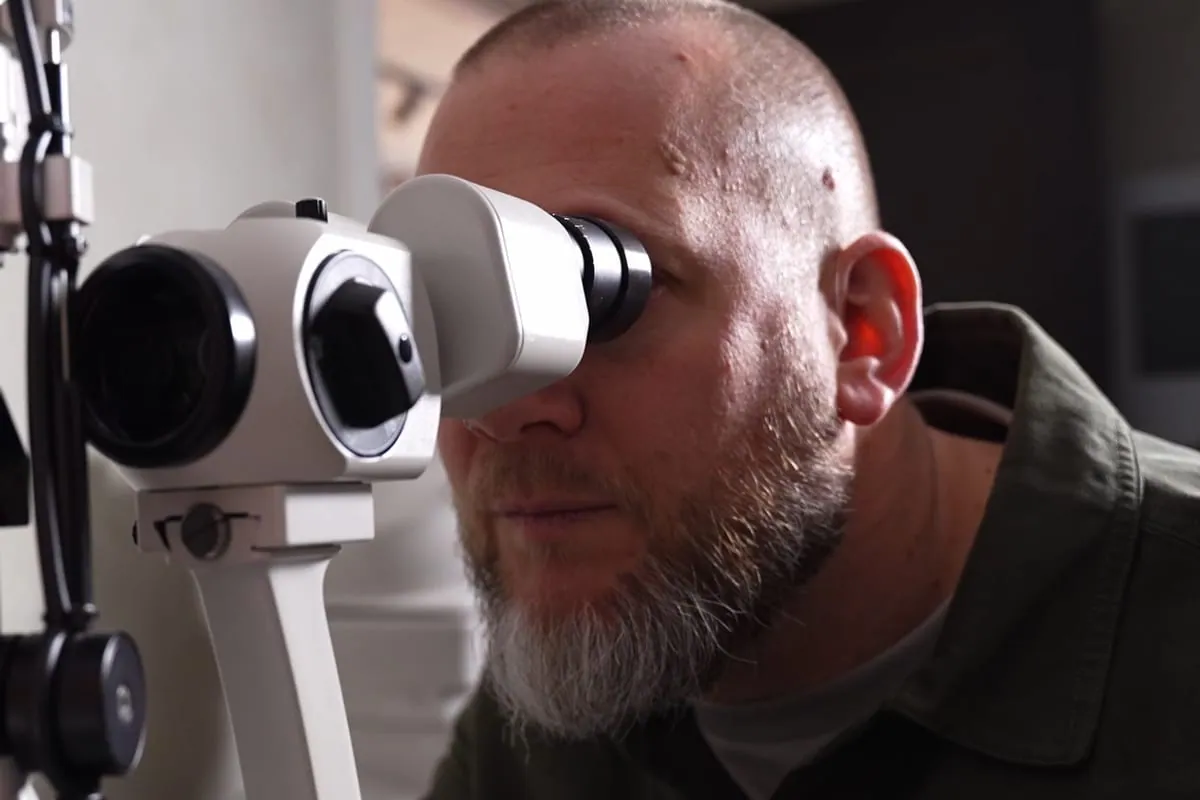
Specialist
Cataract Referral
Assessment and onward referral for cataract care, guiding you smoothly through every step.
Enquire →
Specialist
Myopia Control
Specialist management to slow the progression of short-sightedness in children.
Enquire →
Specialist
Ortho-K
Overnight lenses that gently reshape your vision, so you can see clearly without daytime lenses.
Enquire →
Specialist
Specialist Contact Lenses
Custom-fitted lenses for complex prescriptions, irregular corneas and harder-to-fit eyes.
Enquire →
A more detailed view of your eye health.
If you are concerned about your central vision, have a family history of macular disease, or want greater reassurance, book macular screening at STOTTS.