If your child has become short-sighted, you have probably noticed their prescription creeping stronger at each visit — and wondered whether anything can be done about it. The encouraging answer is yes: myopia management is now an established, evidence-based part of eyecare, and it can meaningfully slow how quickly short-sightedness progresses. It cannot reverse it, but slowing it down matters more than many parents realise.
Why children become short-sighted
Short-sightedness (myopia) happens when the eye grows a little too long from front to back, so distant objects focus just in front of the retina instead of on it — which is why the whiteboard, the television or road signs look blurred while close-up vision stays clear. It usually begins during the school years and tends to progress as a child grows, because the eye is still developing. Both genetics (short-sighted parents) and lifestyle play a part.
Why slowing it down matters
It is tempting to think a stronger prescription is simply a matter of thicker lenses — but there is more to it. The higher a person’s myopia becomes, the greater their lifelong risk of certain eye conditions in adulthood, including retinal detachment, myopic changes at the back of the eye, glaucoma and earlier cataract. Slowing a child’s myopia while their eyes are still developing means they are likely to end up with a lower final prescription — and a lower long-term risk. That is the real goal of myopia management: not just clearer vision now, but healthier eyes for life.
How myopia can be slowed
Ordinary glasses correct the blur but do not slow the underlying growth of the eye. Myopia management uses specially designed options shown to reduce how quickly it progresses:
- Myopia-management spectacle lenses — modern lenses that look like normal glasses but are designed to slow progression while giving clear vision
- Soft myopia-control contact lenses — daily lenses designed specifically to slow progression in suitable children
- Orthokeratology (ortho-k) — special lenses worn overnight that gently reshape the front of the eye, giving clear vision by day without glasses
- Low-dose atropine eye drops — a very dilute drop, used under clinical supervision, shown to slow progression
No single option is right for every child. The right choice depends on their age, prescription, how quickly it is changing, their eyes and their lifestyle — which is what a myopia-management consultation is for.
What parents can do at home too
Alongside clinical management, everyday habits genuinely help — and they are worth building in for every child, short-sighted or not:
- Time outdoors — around two hours a day of daylight is one of the better-evidenced protective factors
- Balance close work — take regular breaks from books, tablets and phones
- Keep screens and books at a sensible distance, rather than right up to the face
- Regular eye tests, so any change is caught and acted on early
Why early eye tests matter so much
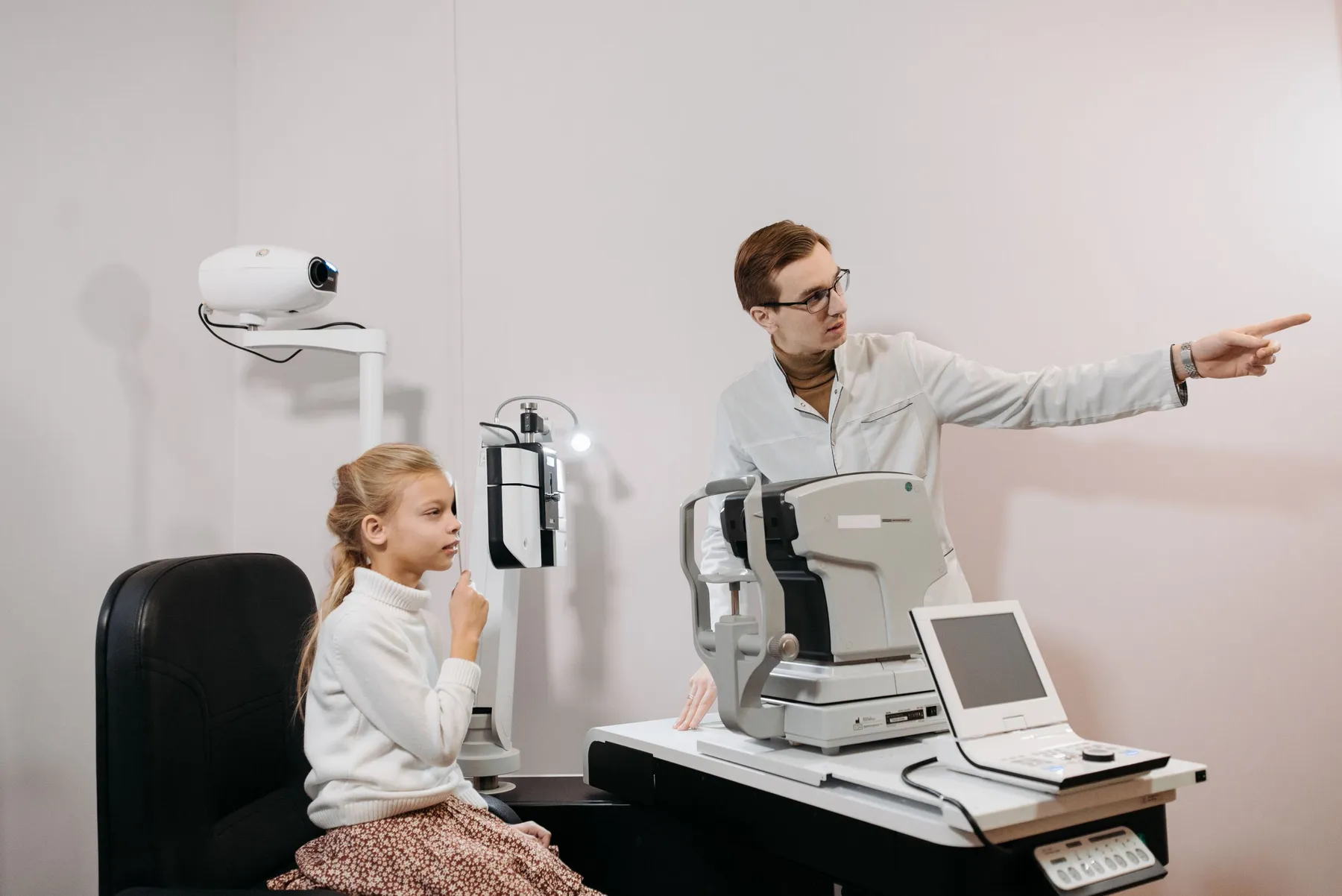
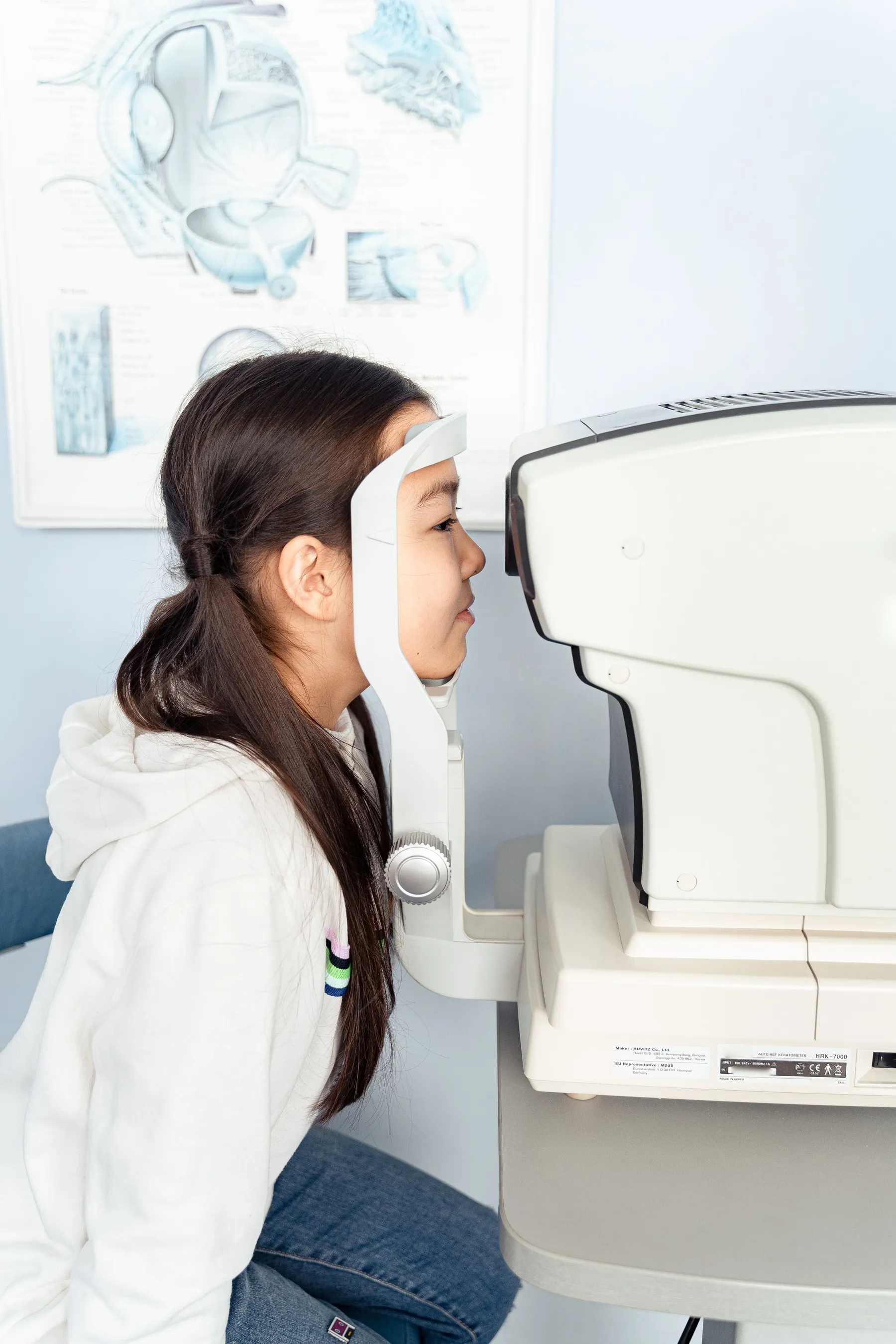
Children rarely complain that their vision is blurred — they assume everyone sees the way they do, and simply adapt. That is why so much short-sightedness is first picked up at a routine eye test rather than by a child saying anything. The earlier myopia is identified, the sooner management can begin, and the more progression there is to save. Children’s eye examinations are quick, painless and, for under-16s, covered by the NHS.
Myopia management at STOTTS.
We offer children’s eyecare and dedicated myopia management, assessing how your child’s eyes are developing and talking you through whether a management option would help. It is calm, thorough and explained in plain language — for you and for them. If you have noticed your child’s prescription increasing, it is well worth a conversation.
We cannot reverse short-sightedness — but we can often slow it down. And a lower final prescription means healthier eyes for the whole of your child’s life.
Sources
- NHS — Short-sightedness (myopia)nhs.uk
- College of Optometrists — Myopia management guidancecollege-optometrists.org
- College of Optometrists — Assessing and managing children with myopiacollege-optometrists.org