Children very rarely announce that they cannot see well — because to them, however they see is simply normal. That is why a vision problem so often shows up in behaviour rather than words. Knowing the signs helps you catch it early, when it is most easily helped.
Signs to watch for
- Sitting very close to the television, or holding books and screens close to their face
- Squinting or screwing up their eyes to see
- Tilting or turning their head to look at things
- Frequent eye-rubbing, or covering or closing one eye
- Headaches or tired eyes, especially after school or reading
- Losing their place when reading, or using a finger to follow the line
- Struggling or losing interest at school, or seeming clumsy and knocking into things
- A turning or wandering eye (a squint), which should always be checked promptly
Why acting early matters
A child’s visual system is still developing, and the brain learns to see during these early years. If one eye is not focusing properly, it can lead to a lazy eye (amblyopia) — and this is far more treatable when caught young than left until later. A children’s eye test can pick up these things long before they become a problem.
When should a child have their first eye test?
You can bring a child for an eye test at any age — around three to four is a common time for a first check, but sooner is absolutely right if you have any concern or there is a family history of eye problems. You do not need to wait until they can read or even talk; we have child-friendly ways to test vision at every age.
Free on the NHS for under-16s, and under-19s in full-time education
NHS-funded sight tests are available for all children under 16, and under 19s in full-time education — so cost is never a reason to wait. (You can read more about who qualifies for a free NHS eye test.) It is also worth knowing that school vision screening, where it happens, is a quick check rather than a full eye examination.
What a children’s eye test involves
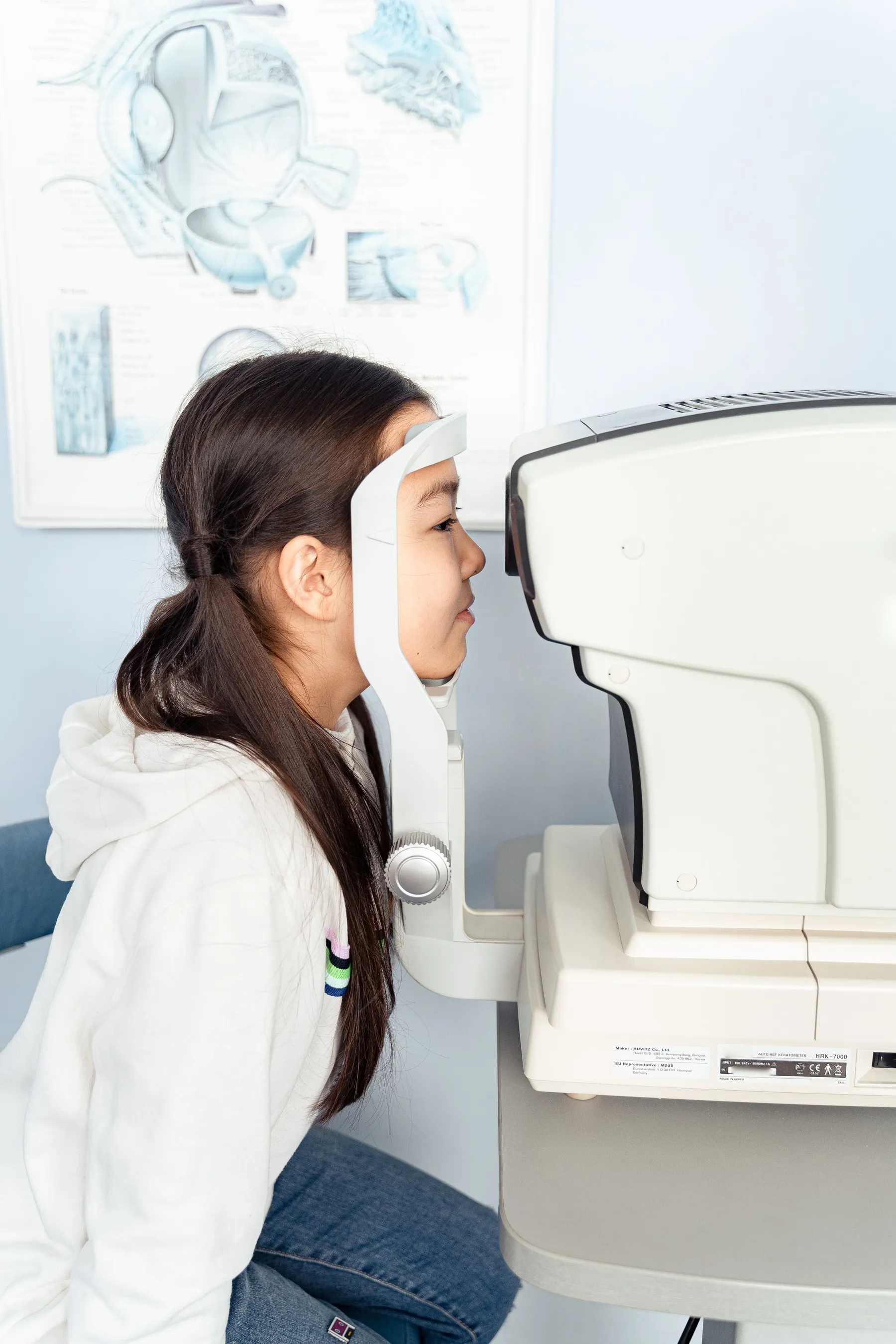
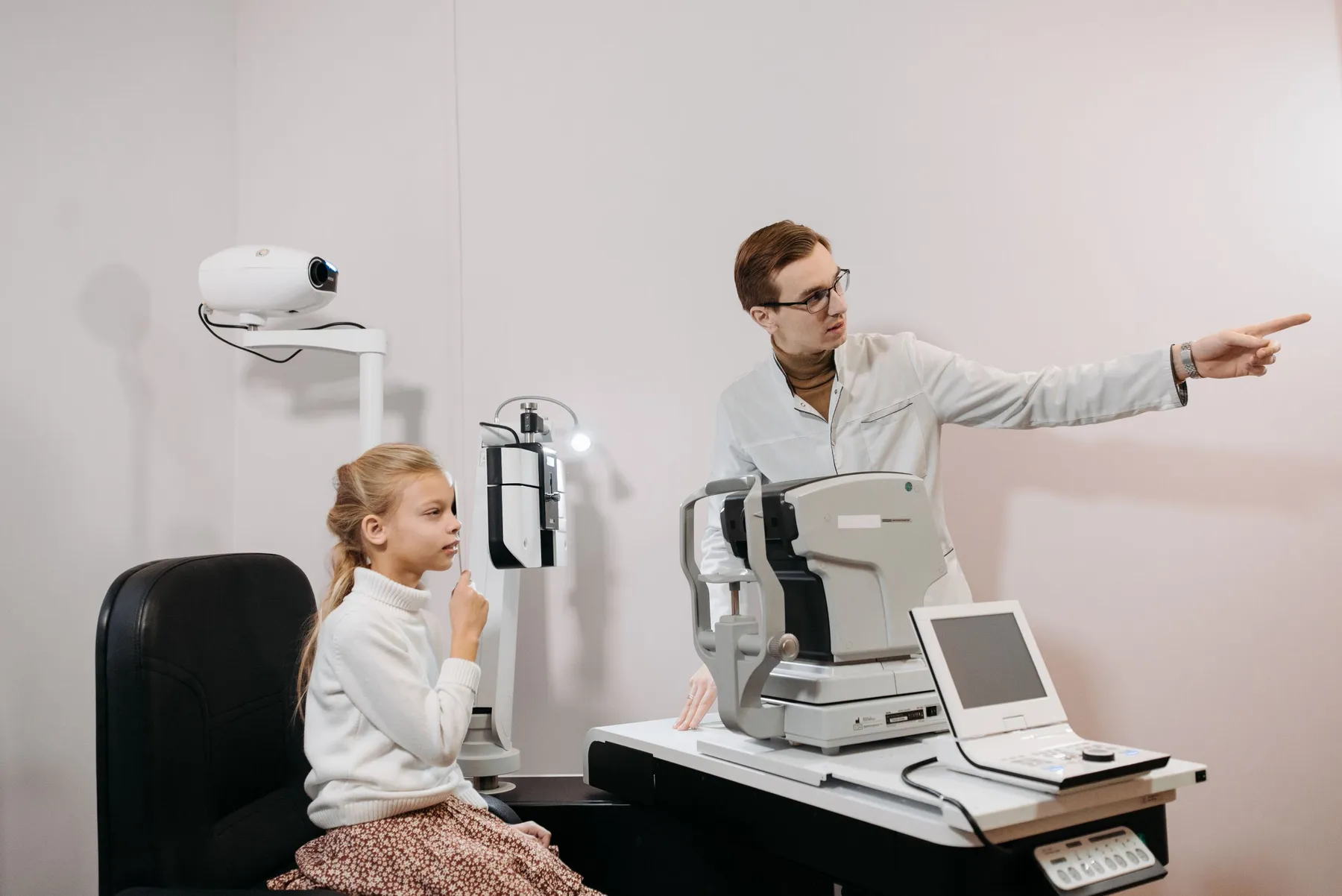
Our tests are relaxed and child-friendly — often more like a game than an exam. As well as checking whether glasses would help, we look at eye health and how the eyes work together, and can advise on slowing the progression of short-sightedness where relevant. The aim is simple: to make sure your child can see clearly and comfortably as they learn and grow.
Children do not know what they are meant to see, so they rarely complain. Watching for the signs — and a simple, friendly eye test — is how we catch it early.← Back to the Journal