Almost everyone gets floaters at some point, and most of the time they are completely harmless — a normal part of the eye ageing. But a sudden change is different. A shower of new floaters, new flashing lights, or a shadow creeping across your vision can be the warning sign of a retinal problem that needs to be checked the same day. Knowing which is which matters.
What are floaters and flashes?
Floaters are the specks, threads or cobweb shapes that drift across your vision and dart away when you try to look at them. They are tiny clumps within the clear gel inside your eye, casting shadows on the retina. Flashes are brief streaks or sparkles of light, often at the edge of your vision. Both are extremely common, particularly as we get older.
Why they usually happen
Most new floaters and flashes are caused by a very common, age-related change called a posterior vitreous detachment, where the gel inside the eye shrinks and gently peels away from the retina. It tends to happen from around your 50s (earlier if you are short-sighted), and in most cases it is harmless and settles down as your brain learns to ignore the floaters. The reason we still want to see you promptly is that, occasionally, that same pulling can tear the retina.

The red flags — seek help the same day
Please treat the following as urgent and get your eyes examined the same day, rather than waiting:
- A sudden increase, or a shower, of new floaters
- New flashing lights, or a marked increase in flashes
- A dark shadow, curtain or veil spreading across any part of your vision
- A sudden loss or blurring of part of your sight
- Any of the above after a blow to the eye or head
These can be signs of a retinal tear or a retinal detachment. Contact an optometrist urgently, an eye casualty department, or NHS 111 — the sooner a tear is found, the more easily it can be treated before it progresses.
What is a retinal detachment?
A retinal detachment is where the retina — the light-sensitive layer at the back of the eye — peels away from the wall of the eye. Left untreated it can cause permanent sight loss, which is why it is an emergency. The good news is that a small tear, caught early, can often be sealed quickly with laser before it ever becomes a detachment. Time genuinely matters.
What we do when you come in
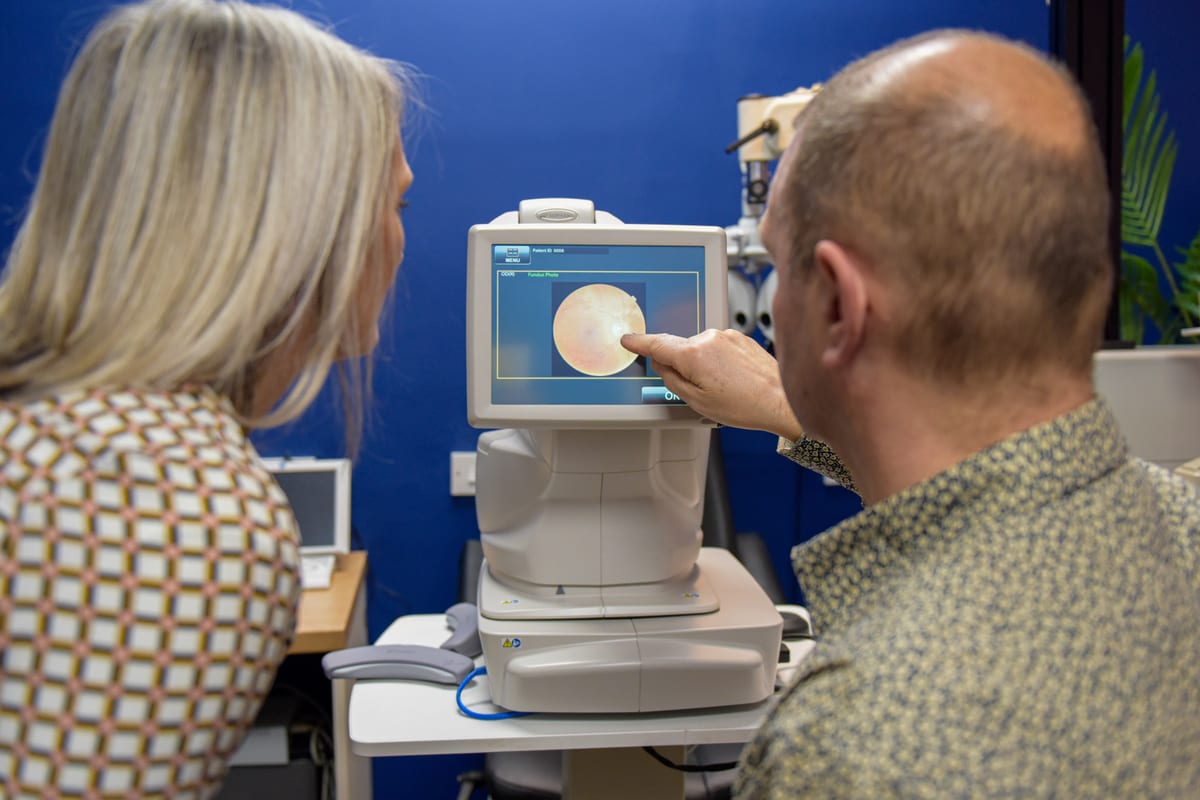
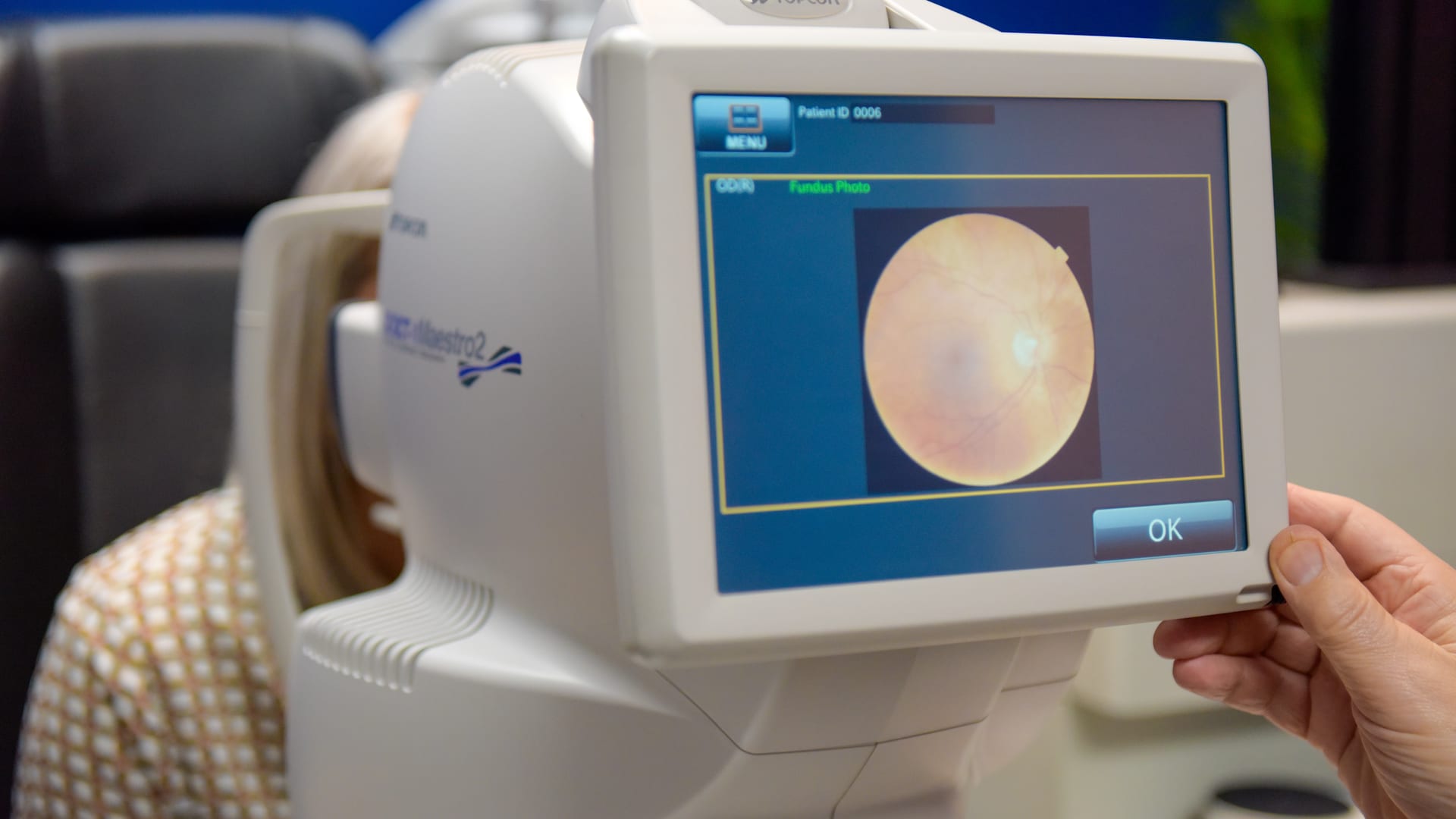
For sudden flashes or floaters, a proper assessment means dilating your pupils with drops and examining the retina in detail (a dilated fundoscopy), often alongside wide-field imaging and an OCT scan, to check carefully for any tear. Most of the time we are able to reassure you — but if there is a tear, we make sure you are seen quickly. This is exactly the kind of thing our advanced eye health assessment and emergency eyecare are built for.
Floaters that are just annoying
Long-standing floaters that have been there for years and are not changing are usually harmless. They can be irritating, especially against a bright sky or a white screen, but they very rarely need treatment, and most people gradually stop noticing them. The key word is change: it is a new or sudden change that warrants a same-day check, not a familiar floater you have had for ages.
Old, stable floaters are usually nothing to worry about. A sudden shower of new floaters, flashes, or a shadow across your vision is a same-day check — never something to wait on.← Back to the Journal