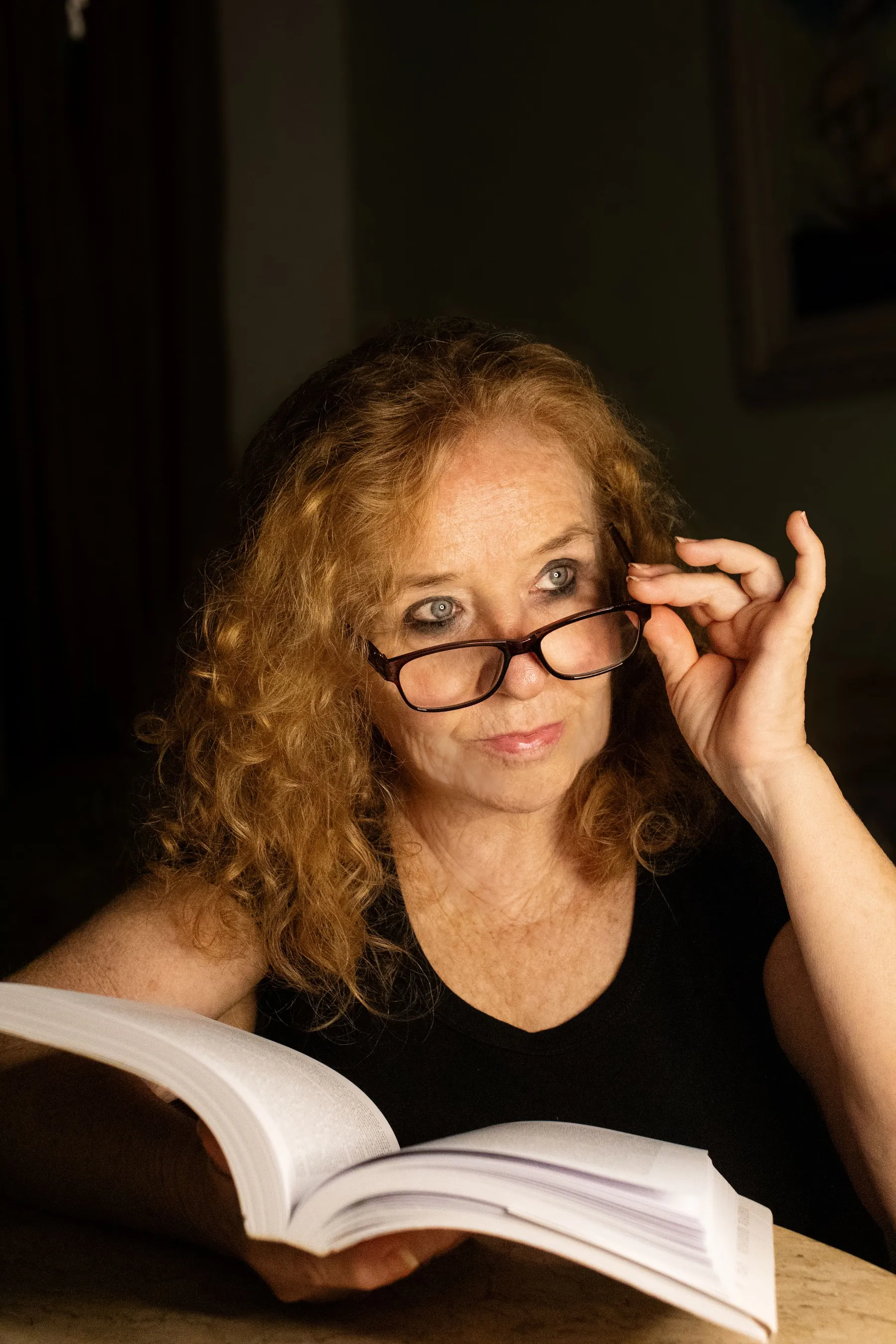
If you have found yourself holding your phone further away, squinting at menus in dim restaurants, or reaching for a brighter light to read the small print, you are in very familiar company. Somewhere around your mid-40s, near vision starts to change for almost everyone. It is called presbyopia, it is a completely normal part of getting older, and it is very easily sorted.
What is happening to your eyes
Inside your eye is a natural lens that changes shape to focus on things up close — rather like a camera focusing. Over time that lens gradually becomes stiffer and less flexible, and the tiny muscle that changes its shape has to work harder. By your mid-40s that flexibility has reduced enough that close-up focusing becomes difficult. That is presbyopia. It is not a disease, not a sign of anything wrong, and not something you have caused.
Why it can feel so sudden
The change itself is slow, and has been happening gradually for years. What feels sudden is the moment it crosses the threshold where you can no longer compensate — often noticed all at once when the light is poor, you are tired, or you are trying to read something very small. In reality your eyes have been changing quietly for some time; you have simply reached the point where it becomes obvious.
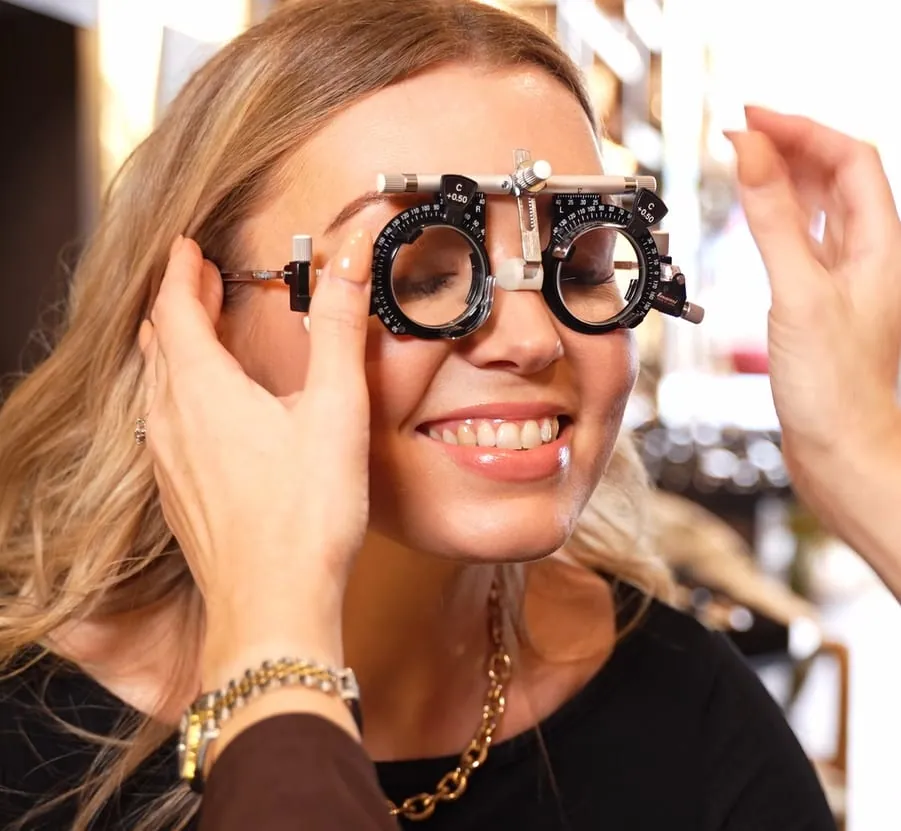
The tell-tale signs
Presbyopia tends to announce itself in the same handful of ways:
- Holding your phone, menu or book further away to see it clearly
- Small print looking blurred, especially in dim light
- Needing brighter light to read comfortably
- Tired eyes or headaches after close work
- A short lag before your eyes “switch” from distance to near and back
It will settle — eventually
Presbyopia usually progresses gradually from your mid-40s into your early-to-mid 60s, when it tends to stabilise. That is why your reading prescription may need updating every couple of years during that period. It is not that your eyes are “getting worse” in any worrying sense — they are moving through a normal, predictable change, and your correction is simply keeping pace with it.
A common myth worth clearing up
You may have heard that wearing reading glasses “makes your eyes lazy” or speeds up the decline. It does not. Reading glasses simply do the focusing work your natural lens can no longer manage; they do not weaken your eyes or make you dependent. Struggling on without the right correction does not train your eyes — it just gives you tired eyes and headaches for no benefit.
Your options
The good news is that presbyopia is one of the most straightforward things to correct, and there is more than one way to do it:
- Reading glasses — simple and effective if your distance vision is fine
- Varifocals — one pair for distance, intermediate and near, with no visible line
- Bifocals — distance and near in one lens, if you prefer them
- Office or screen lenses — tuned to computer and reading distances for desk-based days
- Multifocal contact lenses — for those who would rather not wear glasses for near work
Which suits you best depends on your prescription, your day-to-day life and your preferences — exactly the kind of thing we talk through with you, rather than defaulting to one answer.
Why it is worth booking an eye test
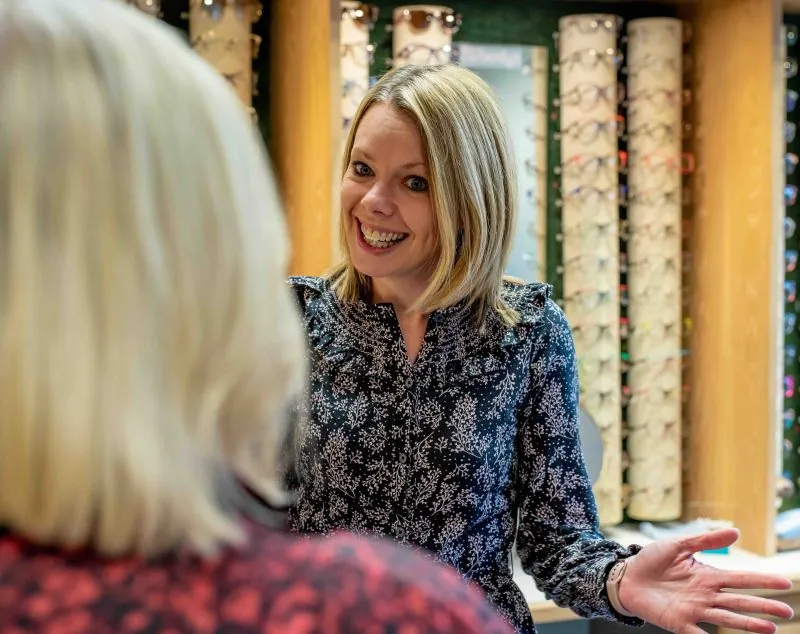
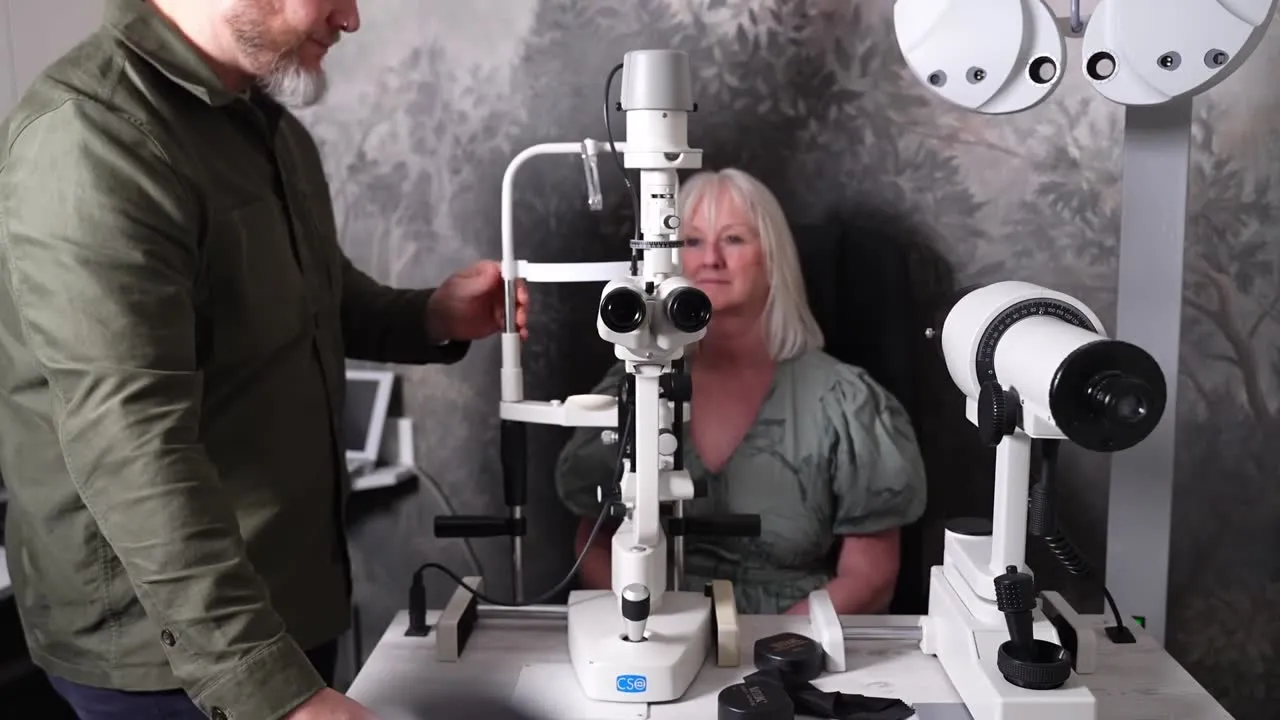
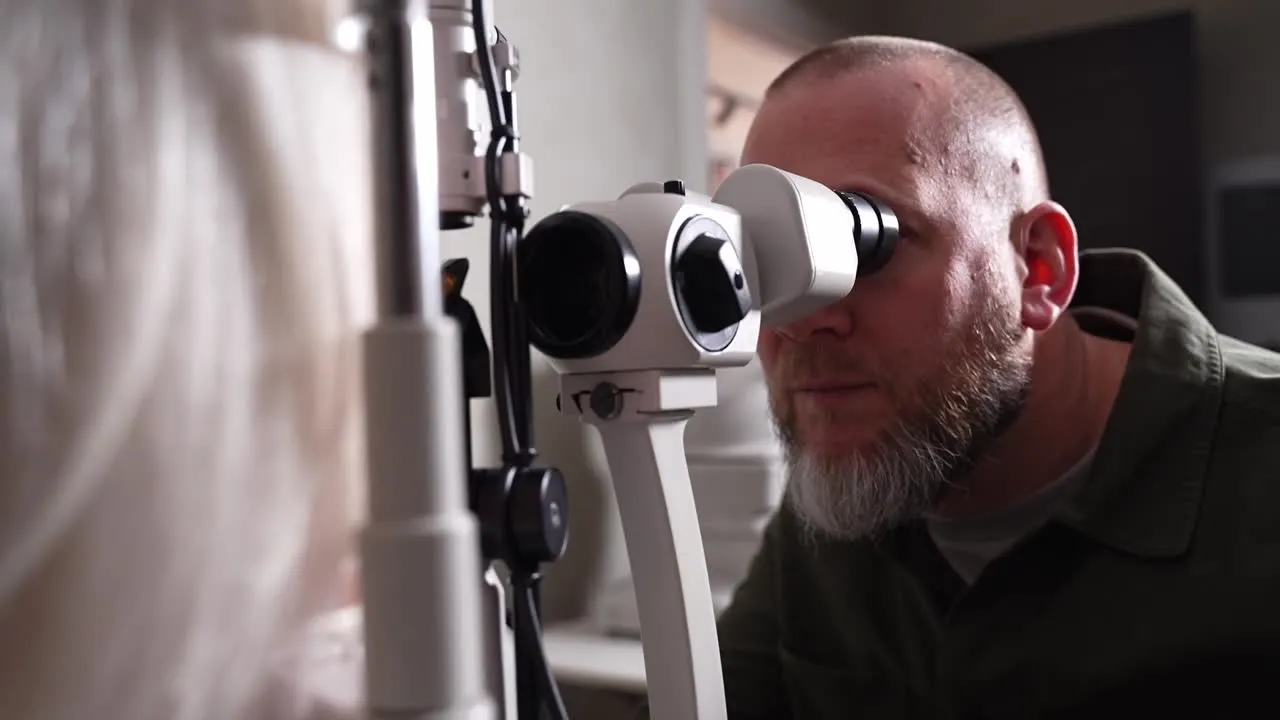
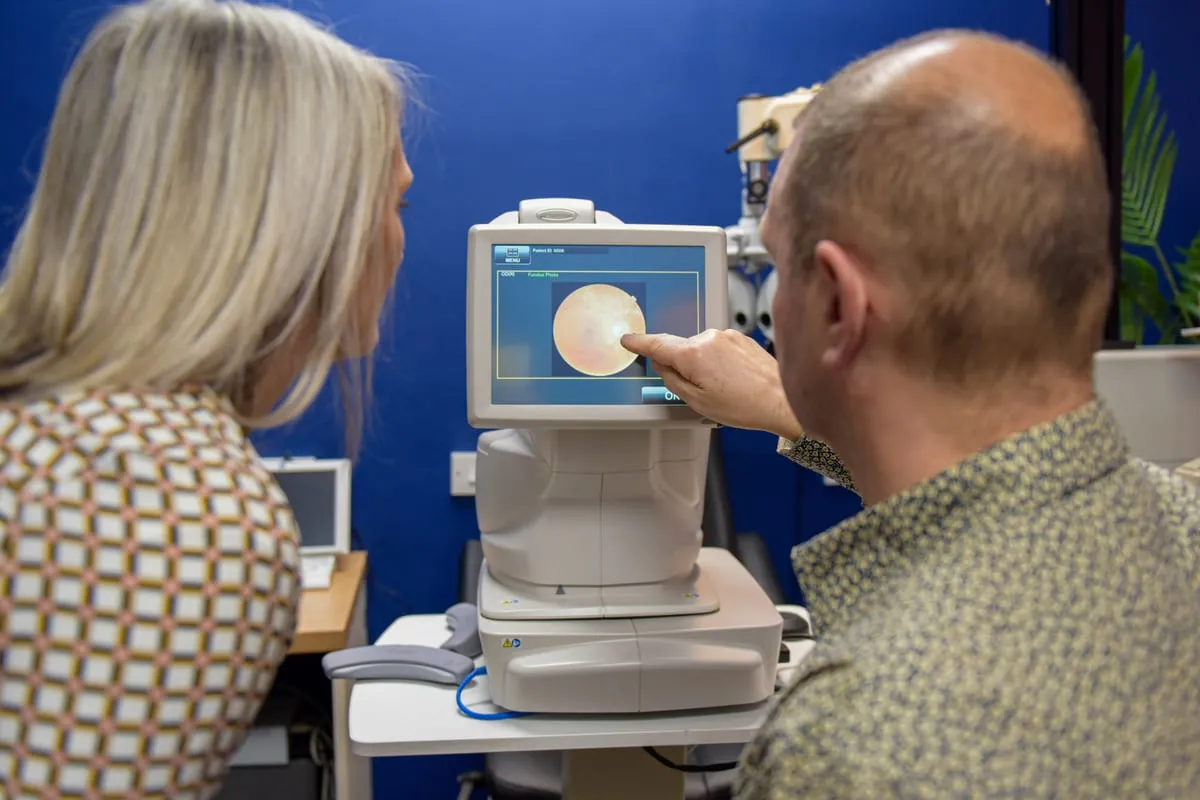
When near vision changes, it is tempting to grab ready-made readers off a shelf. They can be a fine stopgap, but they use the same prescription in both eyes, rarely match your eyes exactly, and do nothing to check your eye health. A proper eye examination gets your correction right for each eye and, just as importantly, checks the health of your eyes — the mid-40s is exactly when regular checks start to matter more. Book an appointment and we will make sure both the reading and the health side are properly looked after.
Needing reading glasses in your 40s is not your eyes failing — it is a normal, universal change. It is also one of the easiest things we put right.← Back to the Journal