If your head aches by mid-afternoon after a day at the computer, your eyes may well be part of the story. Screens do not damage your eyes, but the way we use them can tire the focusing system and trigger headaches — and sometimes an untreated prescription is quietly making it worse.
What is digital eye strain?
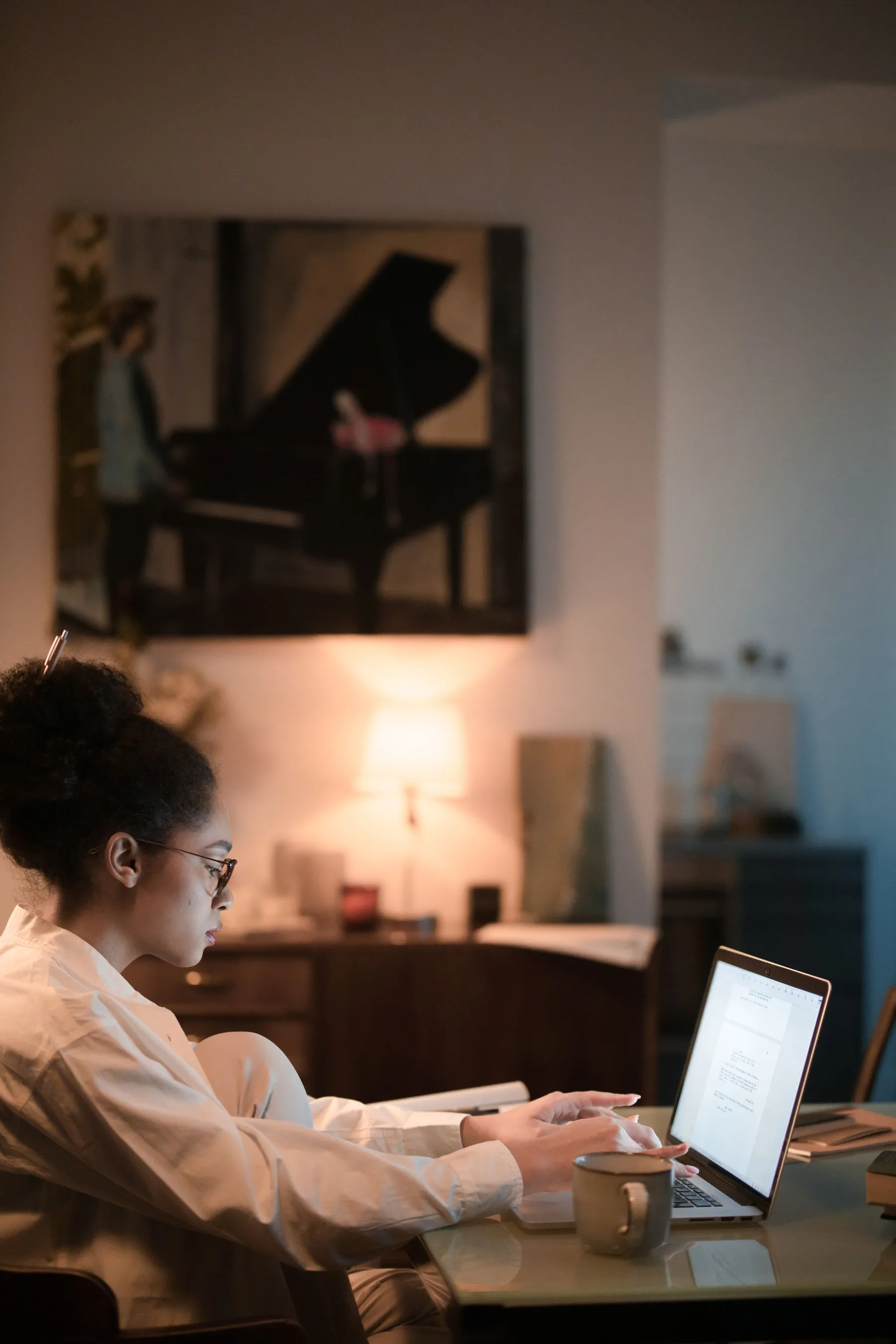
Digital eye strain — sometimes called computer vision syndrome — is the tiredness, dryness and aching that build up during long, close screen work. It typically shows up as a dull headache around the brow or temples, sore or gritty eyes, and vision that blurs briefly when you look up from the screen. It is uncomfortable, but it is not doing lasting harm.
How screens bring on headaches
- We blink far less when concentrating on a screen, so eyes dry out
- The eyes hold a constant close-focus effort for hours, which tires the focusing muscles
- Glare and brightness, or a screen set too high or too close, add to the load
- Small text and poor contrast make the eyes work harder still
- An out-of-date or uncorrected prescription — even a slight one — forces the eyes to strain to stay clear

Simple things that help
- Follow the 20-20-20 rule: every 20 minutes, look at something about 20 feet away for 20 seconds
- Blink often, and use lubricating drops if your eyes feel dry
- Position the screen an arm’s length away and just below eye level, and cut glare from windows and lights
- Increase the text size and take regular screen breaks
When it is really your prescription
If the basics do not settle it, the cause is often optical. A small amount of long-sightedness or astigmatism, or the natural need for reading help from your forties, can all make screen work a strain. Lenses tailored for screens and work distance — often with an anti-reflection coating — can make a real difference. (For the common question of whether tinted lenses help, see are blue light glasses worth it?)
When to get it checked
Book an eye examination if headaches are frequent, clearly worse on screens, or come with blurred or one-sided vision — an up-to-date prescription often solves it. Do see your GP, though, if headaches are severe, persistent, new or different from your usual pattern, or come with other symptoms, as not all headaches are related to the eyes.
Screens will not ruin your eyes — but they will happily tire them. A few habits and the right prescription usually turn the afternoon headache off at the source.← Back to the Journal