
Most people know roughly when their next eye test is due. Almost nobody knows when their next hearing check is, because there is no adult screening programme in the UK and therefore no letter. The result is that hearing gets checked when something has gone wrong, rather than tracked while it is fine.
A reasonable schedule
- Under 50, no symptoms or risk factors — a baseline check once is useful, then only if something changes
- 50 to 60 — every three years or so, since age-related change typically begins in this period
- Over 60 — every two years
- Over 70 — annually, alongside your eye test, which is a simple way to remember it
- Noisy occupation or hobby, at any age — annually, and use protection; noise damage is permanent and preventable
- Existing hearing aids — annually, because your hearing changes and the settings should follow it
The value of a baseline
The argument for a check while your hearing is fine is the same as for an eye examination: a single result is a snapshot, two results are a trend. An audiogram taken at 45 makes an audiogram at 55 far more informative, because it shows what has changed rather than only where you now stand.
Circumstances that move you up the list
A family history of hearing loss. Years in a loud working environment, or a lifetime of loud music. Diabetes, which is associated with hearing loss. Certain medications, including some chemotherapy drugs and high-dose long-term use of some others — worth mentioning to us if any apply. And tinnitus, which frequently accompanies a hearing change and is worth having assessed rather than tolerated.
What should not wait
Some things are not for a schedule. Hearing that drops suddenly, particularly in one ear, should be treated as an emergency and seen within days — the window for treatment is short and this is covered in sudden hearing loss. Also prompt: hearing loss in one ear only, pain or discharge, dizziness with hearing change, or tinnitus that arrives suddenly or pulses in time with your heartbeat.
What a check actually involves
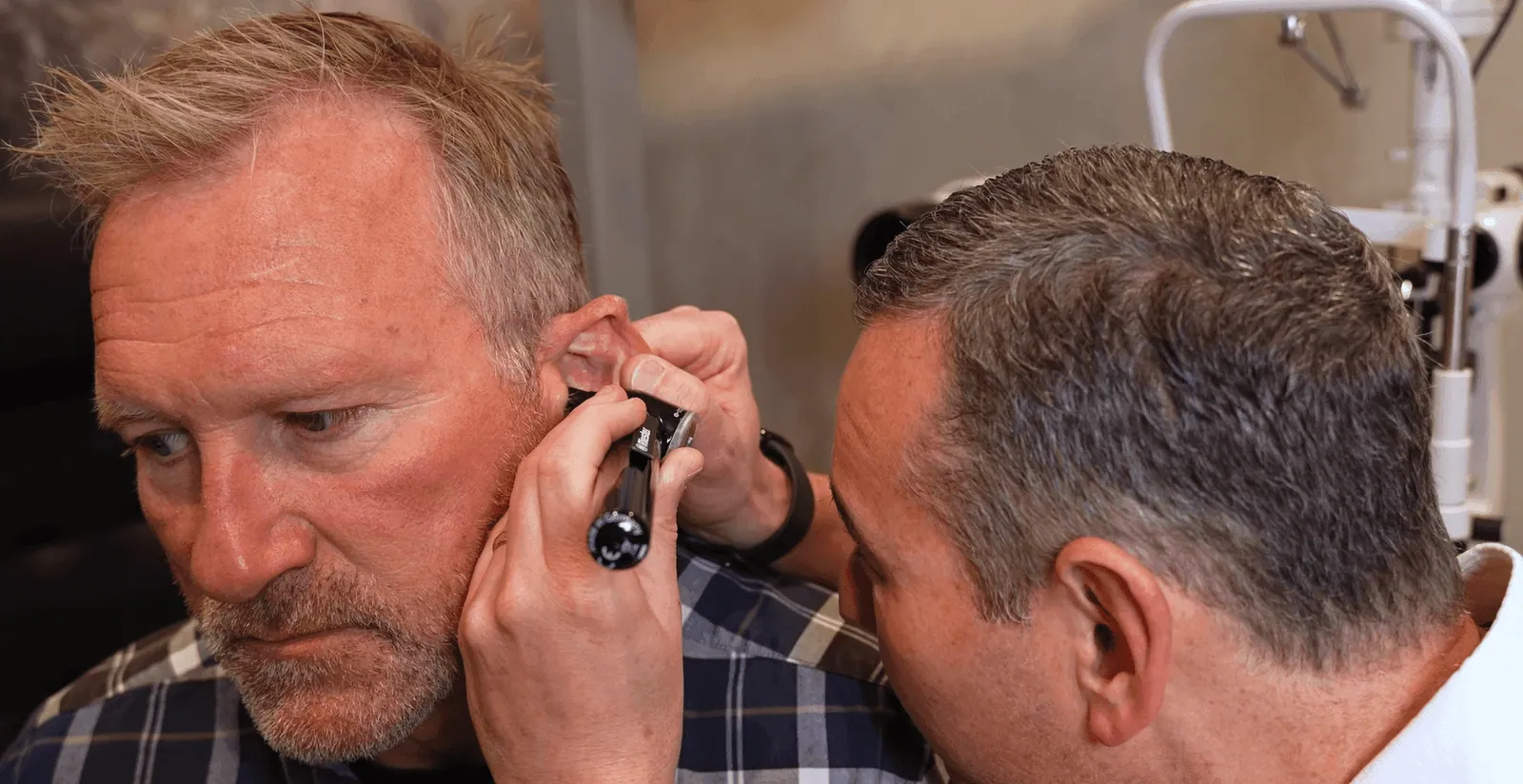
We look inside both ears with a video otoscope, so you see what we see — this alone resolves a good proportion of concerns, because wax is common and easily dealt with. Then a full assessment across the frequency range, plus how you handle speech, which is often more revealing than the tones. It takes about an hour, it is complimentary, and you leave knowing where you stand. Hearing care is available at every STOTTS. practice.
If the answer is that nothing needs doing
That is a common and useful outcome, and it is a result rather than a wasted appointment. You will have a baseline on file, and we will tell you when to come back. Nobody is going to be sold a hearing aid they do not need — that is not a promise that costs us anything, because a hearing aid fitted to someone who does not need one does not get worn.
There is no letter telling you when your hearing is due. That is the only reason most people have never had it checked.
Sources
- NHS — Hearing tests nhs.uk
- RNID — Hearing tests rnid.org.uk