
Age-related hearing loss develops over years, and the brain is remarkably good at filling gaps. That combination is why the average person waits around a decade between first noticing something and doing anything about it — not through denial, but because there is rarely a day when it becomes obvious. The signs are there; they just do not look like hearing loss.
Why gradual loss is so easy to miss
High-frequency hearing usually goes first. That does not make things quieter — it makes them less distinct, because consonants such as s, f, th and t carry the high frequencies that separate one word from another. Volume feels normal. Clarity does not. So the experience is not “I cannot hear you”, it is “you are mumbling”, which does not sound like a hearing problem from the inside.
The signs people actually report
- Other people seem to mumble, particularly women and children, whose voices carry more high frequency
- You manage one-to-one but struggle in a restaurant or a pub
- The television is louder than it used to be, or someone else has said so
- You find yourself watching faces to follow a conversation, and lost when you look away
- You miss the phone or the doorbell, or a birdsong you used to notice
- Conversation in a group leaves you genuinely tired, because listening has become effortful work
The ones other people notice before you do
Family often spot it first, and often describe it as a personality change rather than a hearing change: going quiet in groups, avoiding the busy pub, answering slightly off the question, withdrawing from things that used to be enjoyable. If someone close to you has raised any of that, it is worth taking seriously even if nothing feels wrong to you — from the inside, adapted hearing feels entirely normal.
A check you can do this week
Next time you are somewhere with background noise, notice how much work you are doing. Are you watching mouths? Guessing from context and checking afterwards? Choosing the seat with your better ear to the room? Coming home tired from a conversation rather than from the evening? That effort is the earliest measurable sign, and it appears long before anything sounds quiet.
Why waiting a decade matters
Hearing is processed in the brain, not the ear, and the pathways that handle speech stay sharper when they continue to receive the signal. Addressing a change earlier is generally easier to adapt to than addressing it after many years, and the evidence on hearing, social isolation and cognition is taken seriously enough that it is worth not simply putting off. We have written about the link between hearing loss and dementia separately, and tried to be careful about what the research does and does not show.
What a check involves
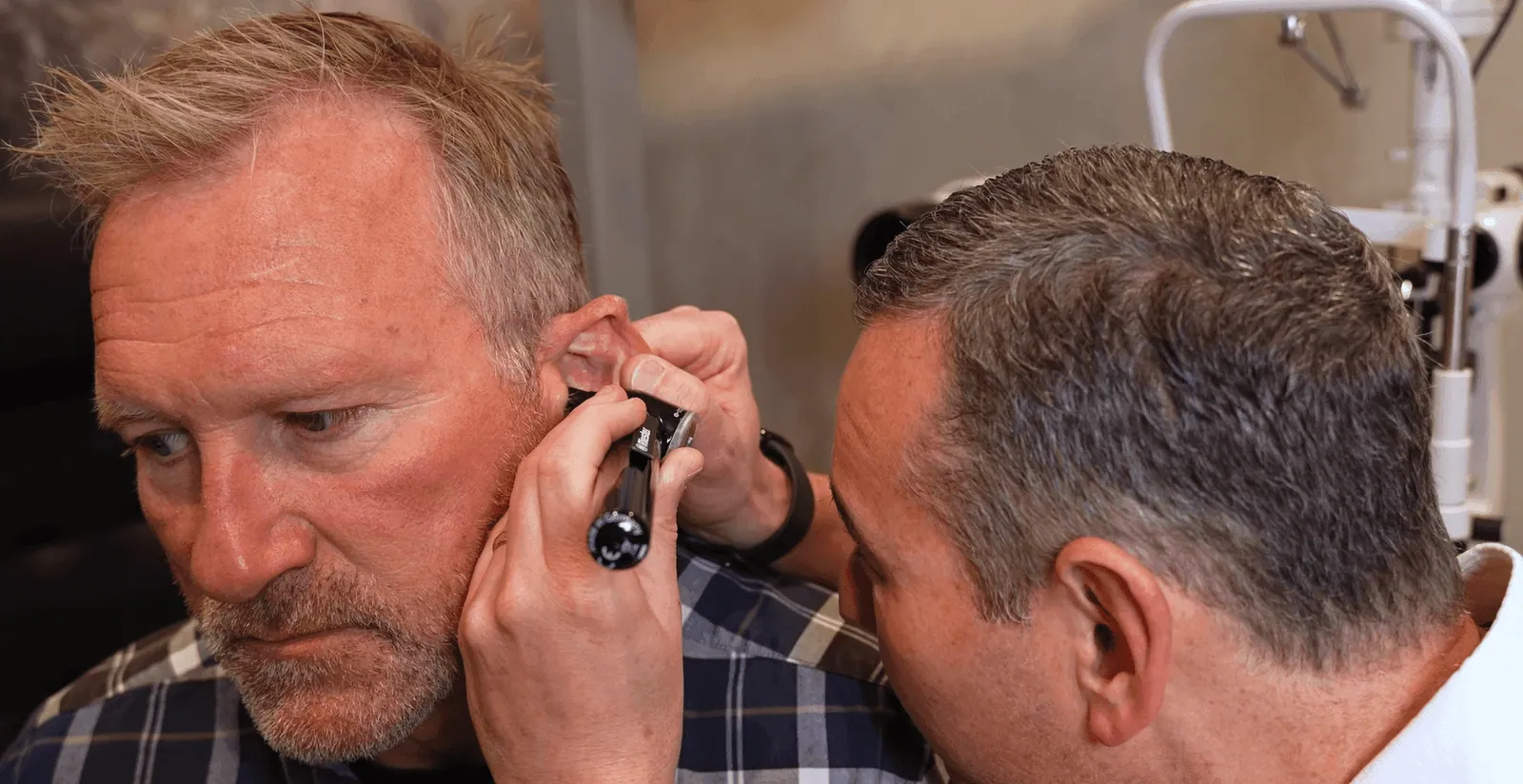
Not much. We look in the ear first, because wax accounts for a good share of what people arrive worried about, and it is straightforward to deal with. Then a full assessment, which measures where your hearing actually sits across the frequency range and how well you handle speech. It is complimentary at every STOTTS. practice, and the answer is often that nothing needs doing.
Nobody wakes up unable to hear. They wake up one day having spent ten years working slightly harder than everyone else in the room.
Sources
- RNID — Signs of hearing loss rnid.org.uk
- NHS — Hearing loss nhs.uk