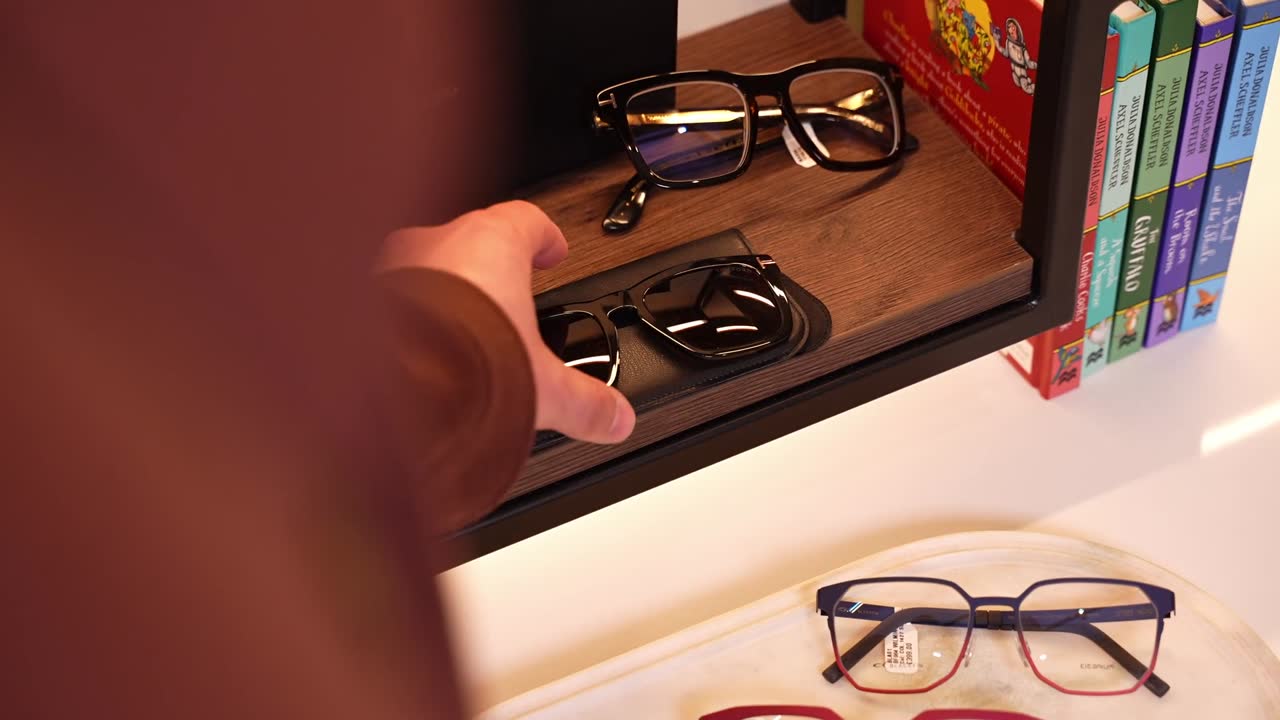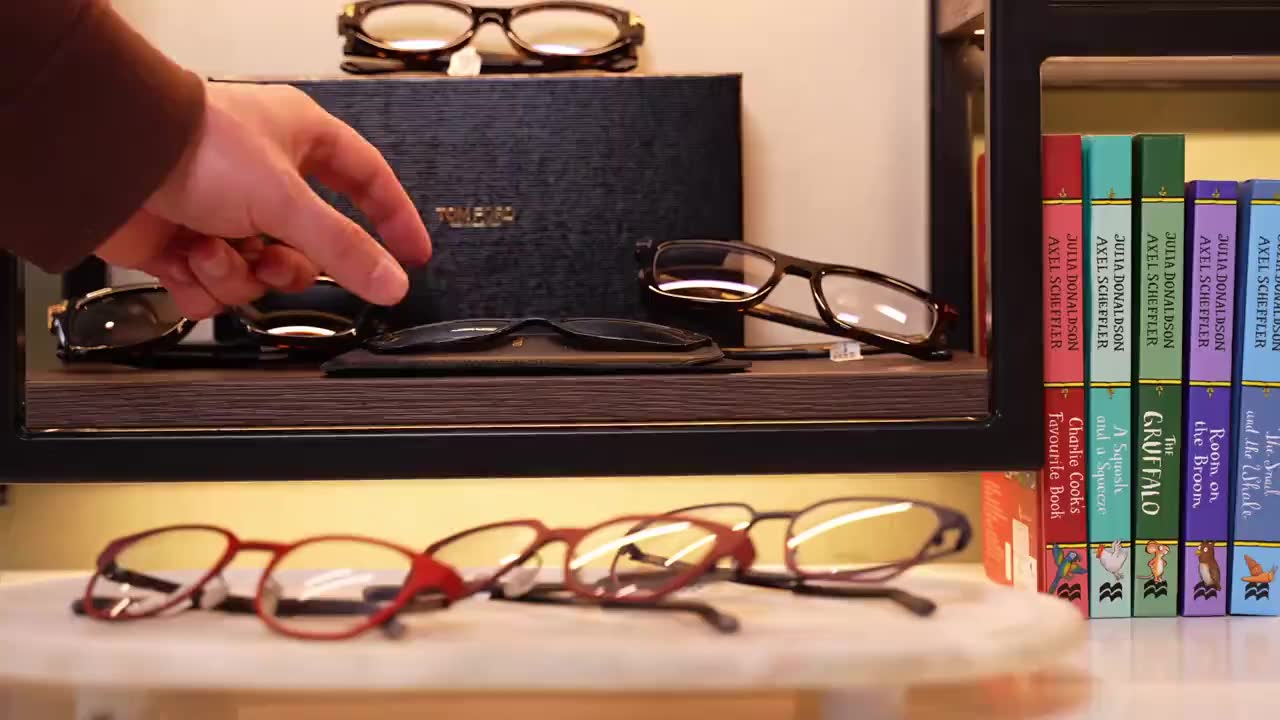

Most style advice about glasses is really fit advice wearing a different hat. Whether a frame suits you is a question about proportion and colouring, and it has reasonably good answers. What you want your glasses to say is a separate question, it has no correct answer, and it is the one people find harder to articulate in a shop.
They are read before you speak
Glasses sit at the centre of your face, above every outfit you own, in every photograph and every meeting. That makes them the single most-seen thing you wear, and people form an impression from them whether or not either of you intends it. That is not a reason for anxiety — it is a reason to make the choice deliberately rather than by default.
Four registers, roughly
- Invisible — rimless, fine metal, colour matched to skin. Reads as professional and unfussy; the frame is deliberately not the point
- Classic — a well-proportioned acetate in tortoiseshell or black. Reads as considered, and dates very slowly
- Architectural — strong shapes, visible construction, unusual materials. Reads as confident and interested in design
- Expressive — colour, unusual silhouettes, a frame that is clearly a choice. Reads as approachable, and as someone not worried about being looked at
None of these is better than the others. They are different sentences, and the only wrong one is the one you did not mean to say.
The question that gets people unstuck
Not “what suits me”, which is our job, but: when someone meets you for the first time, what would you like them to assume? People answer that question quickly and consistently, and the answer usually contradicts the frame they have been reaching for — which is generally the frame closest to the one they already own.
You are allowed more than one register
Nobody expects one pair of shoes to cover a wedding and a walk. If your work is formal and your weekends are not, two frames in different registers is a more honest solution than one compromise that half-serves both. Building a wardrobe over time covers the practicalities.
Style has a mechanical constraint
A register you love can be undermined by a prescription that does not suit it. A strong short-sighted prescription in a large architectural frame carries real edge thickness; a rimless in a high prescription shows every edge. These are solvable with material and shape, and they are worth knowing before you commit rather than after. Why a frame changes on a face goes through the rest of it.
A practical way to decide
Try one from each register, including the one you would never pick. Photograph all four. Look at them the next day rather than in the moment, because the frame that feels bold in a mirror often looks ordinary in a photograph, and the frame that felt safe often looks like nothing at all.
The frame you keep reaching for is usually the one you already own. Trying the one you would never choose is how people find out what they actually wanted.← Back to the Journal