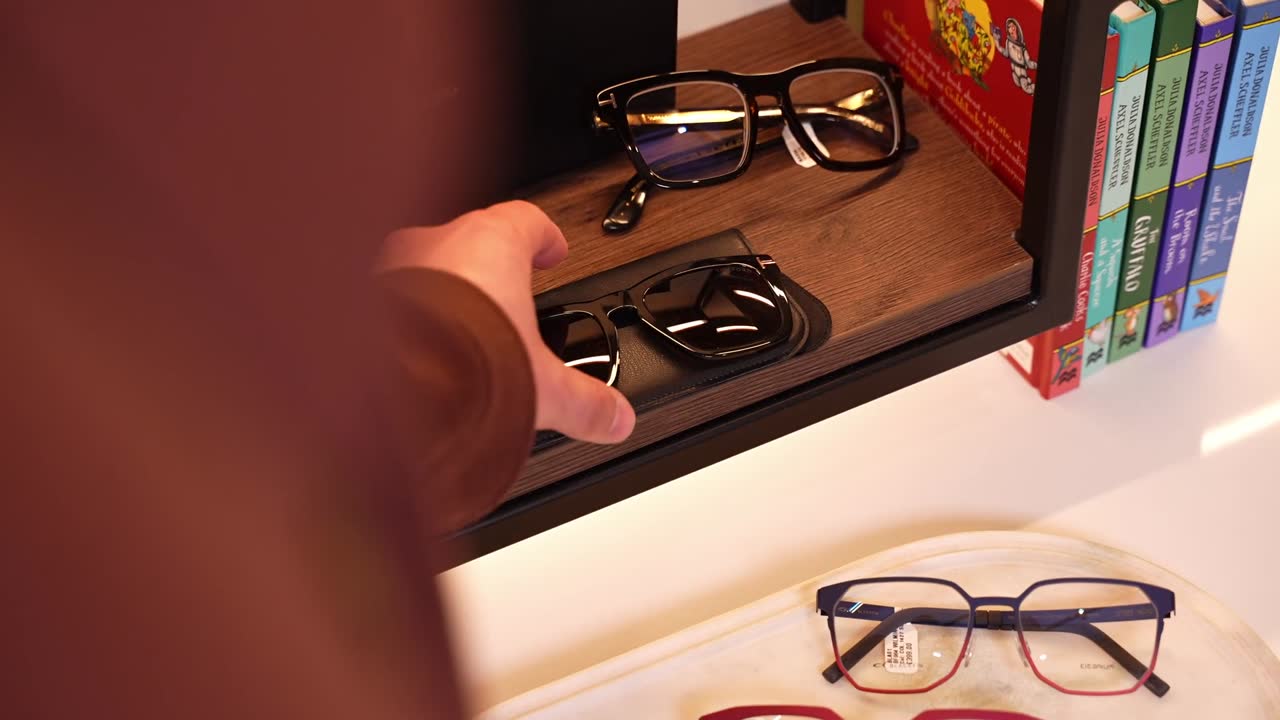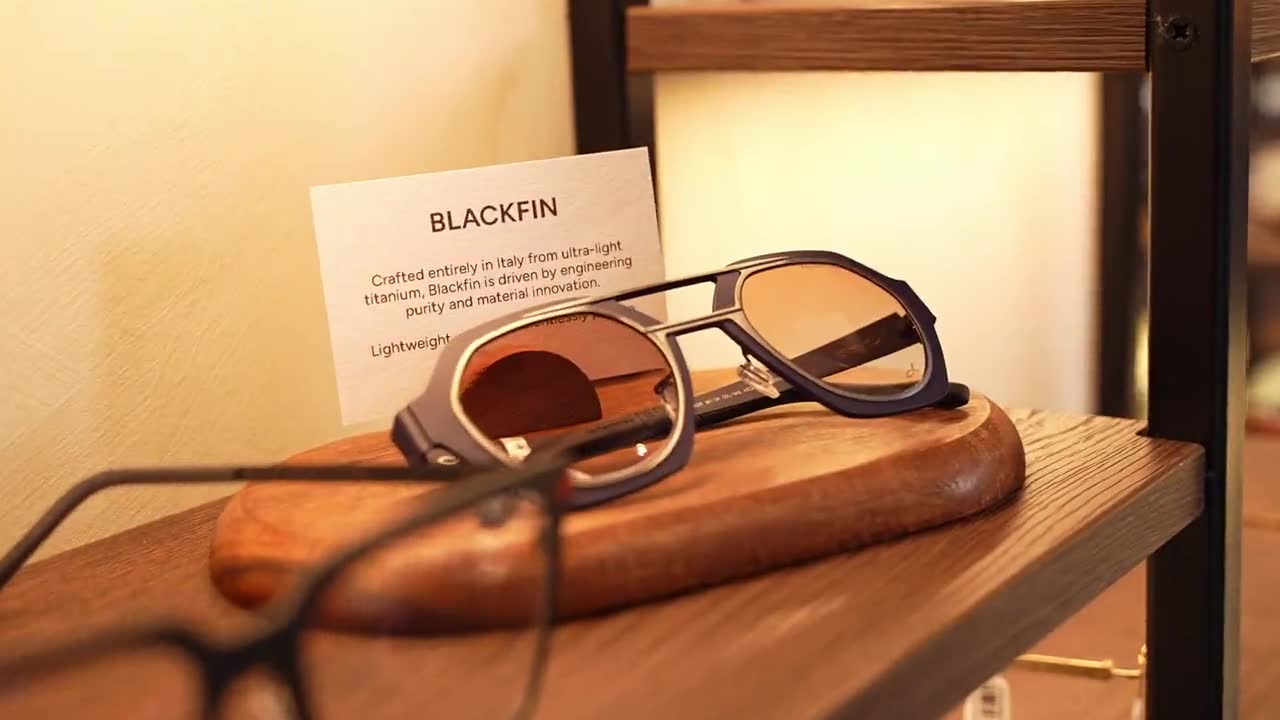
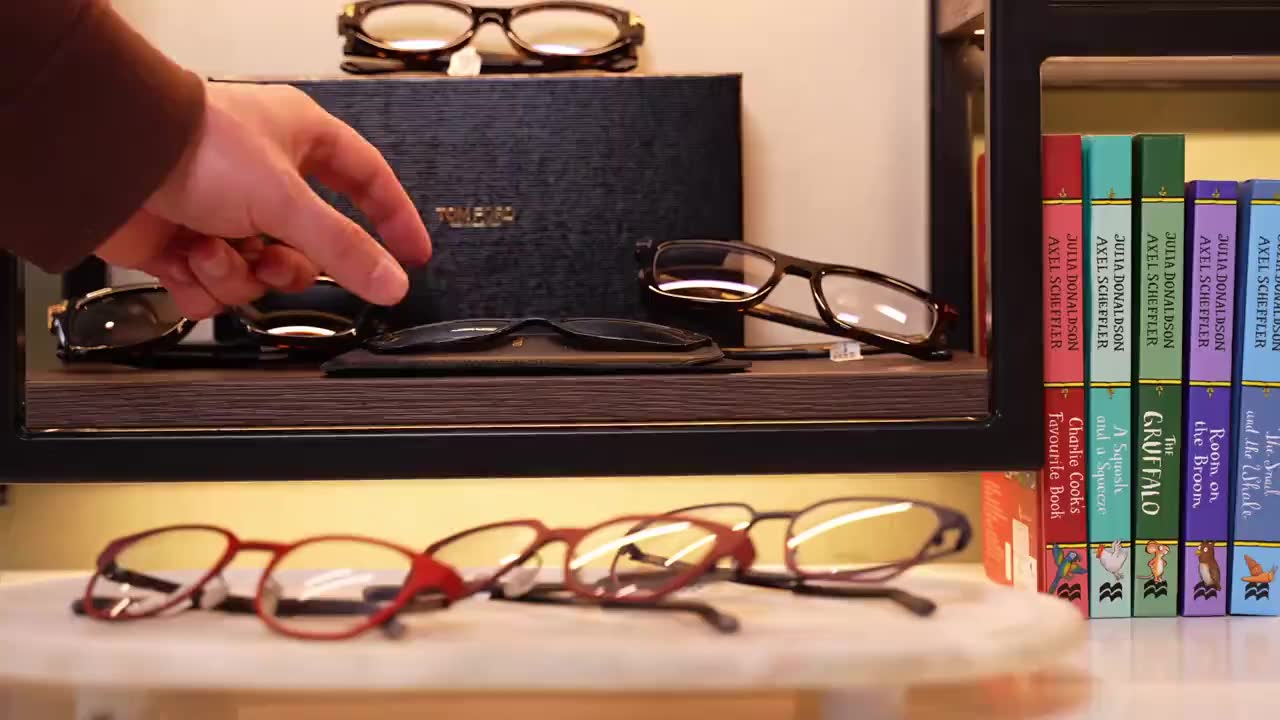
It happens several times a day in our practices. Someone picks up a frame with real enthusiasm, puts it on, and their face falls. The frame has not changed. What has changed is that it is now competing with a person — and a frame on a shelf is an object, while a frame on a face is a relationship.
A display frame is styled to be looked at, not worn
On a lit shelf, at eye level, against a neutral background, a frame is showing you its silhouette and its material. That is the part that makes you pick it up. None of it tells you what the frame does to the space between your eyes, or how it sits against your cheekbone when you smile.
The bridge decides more than the shape does
The bridge controls how high the frame sits, how far apart your eyes appear, and whether the frame rests on your cheeks when you laugh. Two frames of identical shape and width, with bridges 2 mm apart, look like different products on the same face. It is the least glamorous measurement in the shop and the one that most often explains a disappointment.
Colour is a relationship, not a property
- A warm tortoiseshell that looks rich on a shelf can go muddy against cool-toned skin
- Black is high contrast on everyone, which is flattering on some faces and severe on others
- Clear and crystal frames borrow their colour from your skin, so they change completely from person to person
- Metals read warm or cool, and the wrong one can make skin look tired in a way nobody can name
- A frame that matches your hair exactly often disappears — a little contrast usually does more
You are seeing it in a mirror, which is the wrong view
Nobody else ever sees your face the way you do in a mirror. It is reversed, it is static, and you are concentrating on it in a way you never do in conversation. This is why we take photographs — a photograph is closer to how the frame will actually be experienced, and it is why people so often choose differently after seeing three shots side by side.
And the lenses are not in it yet
The display frame has a flat demo lens with no power. Yours will have thickness, an edge, and a surface that reflects. In a rimless or a very thin metal the lens edge becomes part of the design. Knowing your prescription before you fall in love with a frame is not a constraint — it is what stops the disappointment arriving three weeks later. There is more on this in what makes a good pair of glasses.
Try the one you would not have picked
The frame most people leave with is rarely the first one they reached for. We will usually put two in front of you that you would have walked past, because the gap between what photographs well on a shelf and what suits a living face is exactly the gap a dispensing optician is for.
A frame on a shelf is asking to be admired. A frame on your face is asking to be lived in. They are not the same test.← Back to the Journal