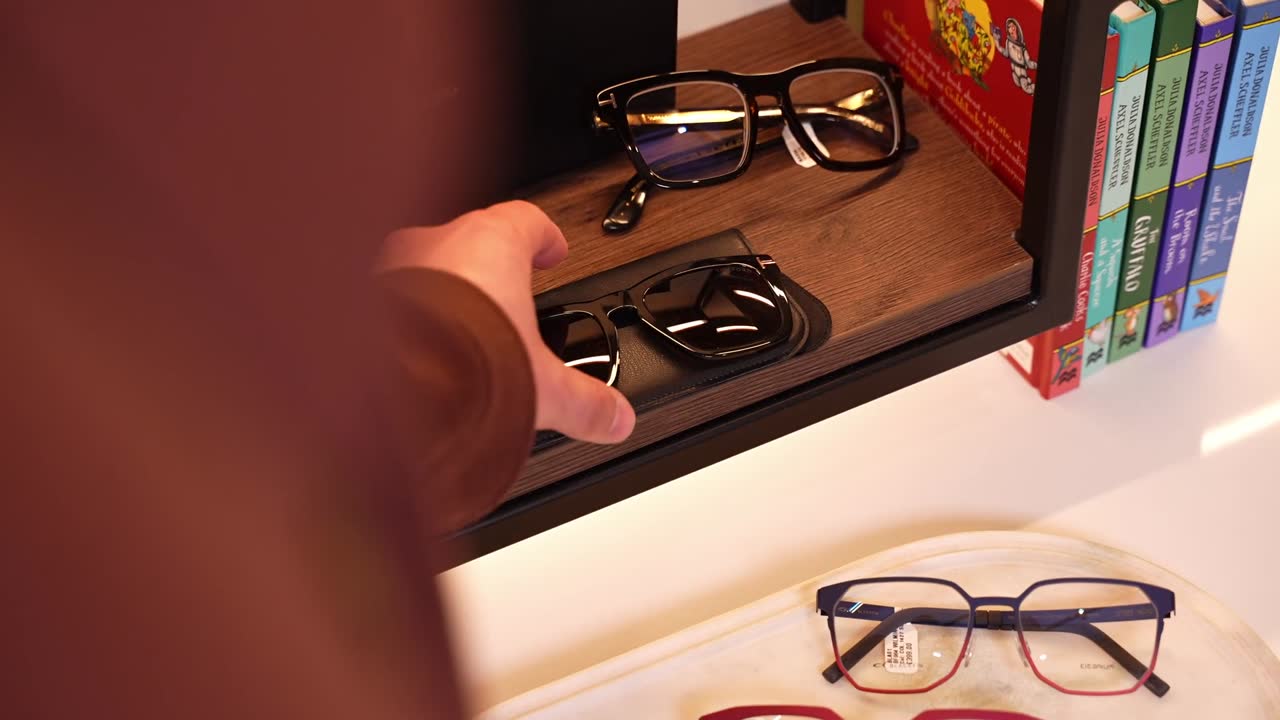

There is a good argument for owning more than one pair of glasses, and we have made it elsewhere. The harder question is which second pair. Buy the wrong one and it sits in a drawer as an expensive reminder; buy the right one and you will wonder how you managed. The answer is decided by your week, not by the shop.
The test: what do you do for more than two hours at a time?
A second pair earns its place when there is a block of your week that your main glasses handle only adequately. Two hours is roughly the threshold at which “adequate” starts to cost you something — usually in tiredness rather than in blur, which is why people so rarely identify it themselves.
Prescription sunglasses
The right second pair if you are outdoors regularly, drive in daylight a lot, or spend time on water, snow or a golf course. Clip-ons and reactive lenses are a reasonable compromise for occasional use, but a reactive lens will not darken fully behind a windscreen, which surprises people. If the sun is a daily feature rather than a holiday one, a dedicated pair is the honest recommendation.
A dedicated screen or desk pair
The right second pair if you spend most of the working day at a fixed intermediate distance — particularly on two monitors, which is where varifocal wearers most often struggle. A lens designed around your measured working distance gives a much wider clear area at that distance than a general-purpose lens can. The trade-off is real and we will state it: these are not for driving.
A driving pair
The rarest of the three, and usually only worth it for varifocal wearers doing long distances or a lot of night driving. For most people the right answer is an up-to-date prescription and a good coating on the pair they already own, which the night driving guide goes through.
Which one, by how your week looks
- More than four hours a day at a desk → a screen pair, almost always
- Outdoors most days, or driving in daylight a lot → sunglasses
- Long night journeys and varifocals → worth measuring before deciding
- A hobby with a fixed working distance — sewing, modelling, music stands → a task pair beats a varifocal at it
- None of the above → you probably do not need a second pair, and we will say so
A note on buying two at once
It is usually cheaper to order a second pair alongside the first, because the measurements are already taken and the appointment already happened. That is a practical point rather than an offer, and we would still rather you bought one pair that suits you than two that half-do. The broader case for more than one pair is in why modern life needs an eyewear wardrobe and how to build one over time.
The second pair worth owning is the one that covers the block of your week your first pair only just manages. Everything else lives in a drawer.← Back to the Journal