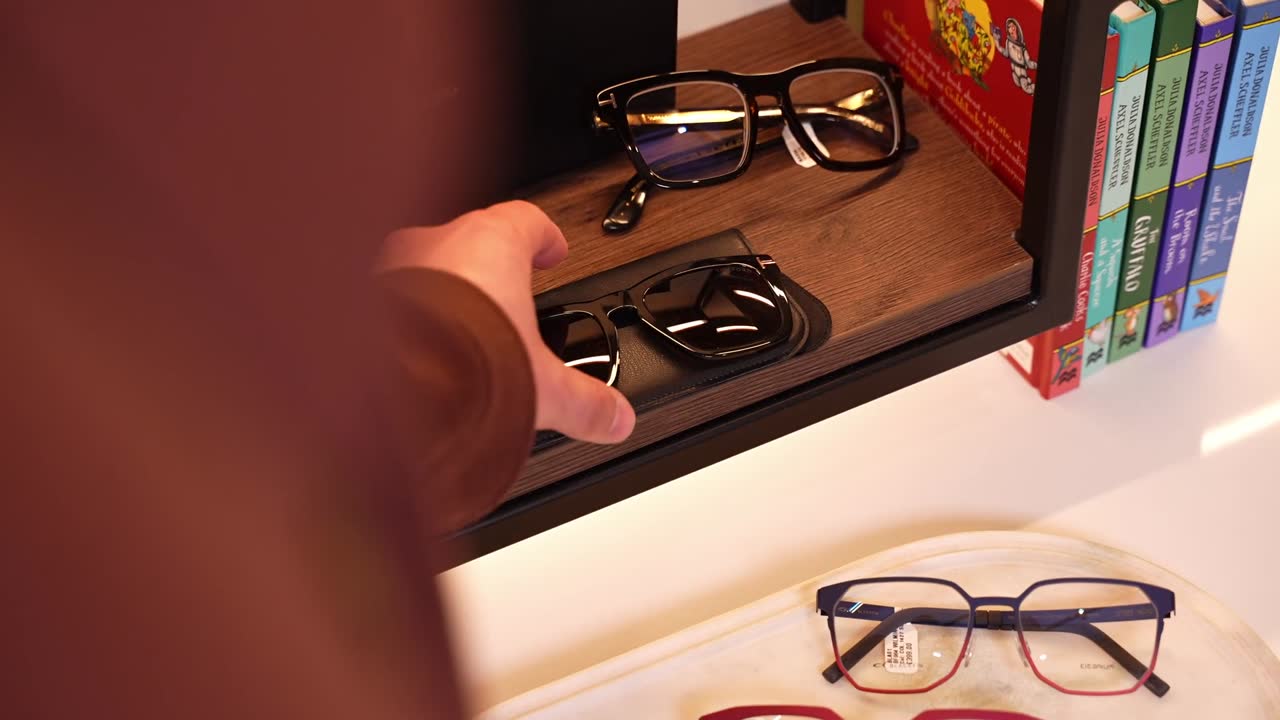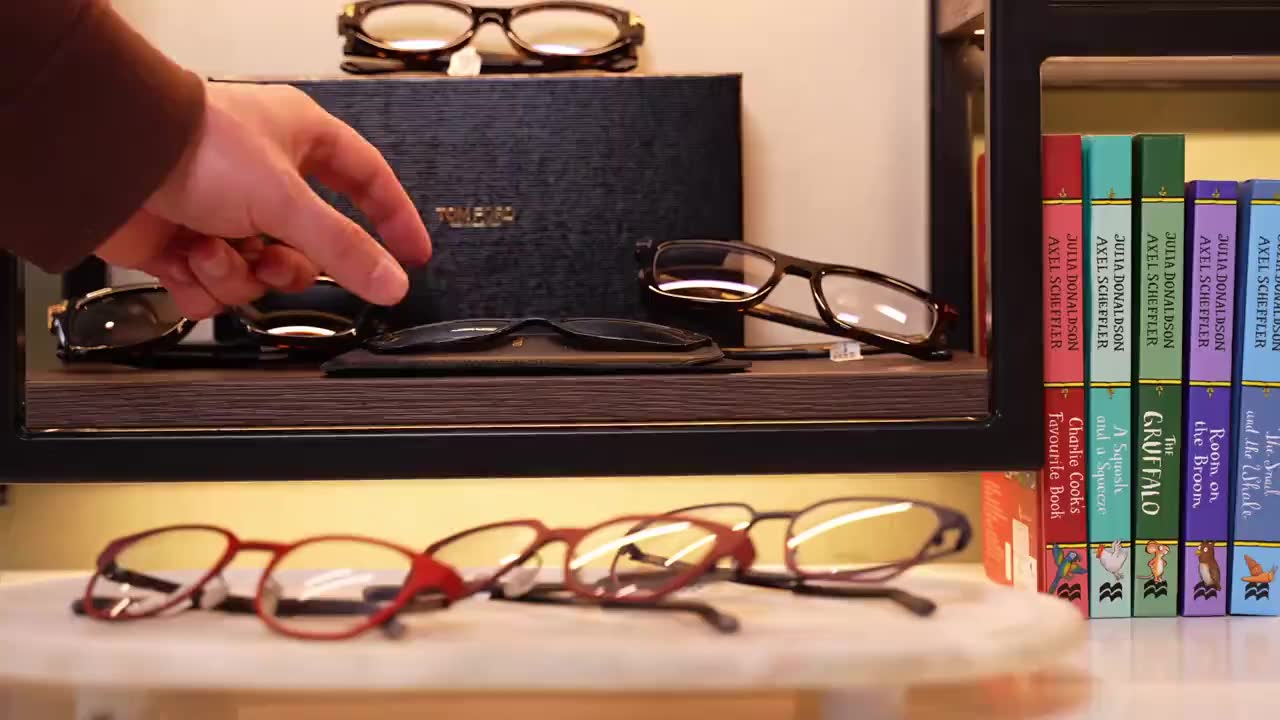
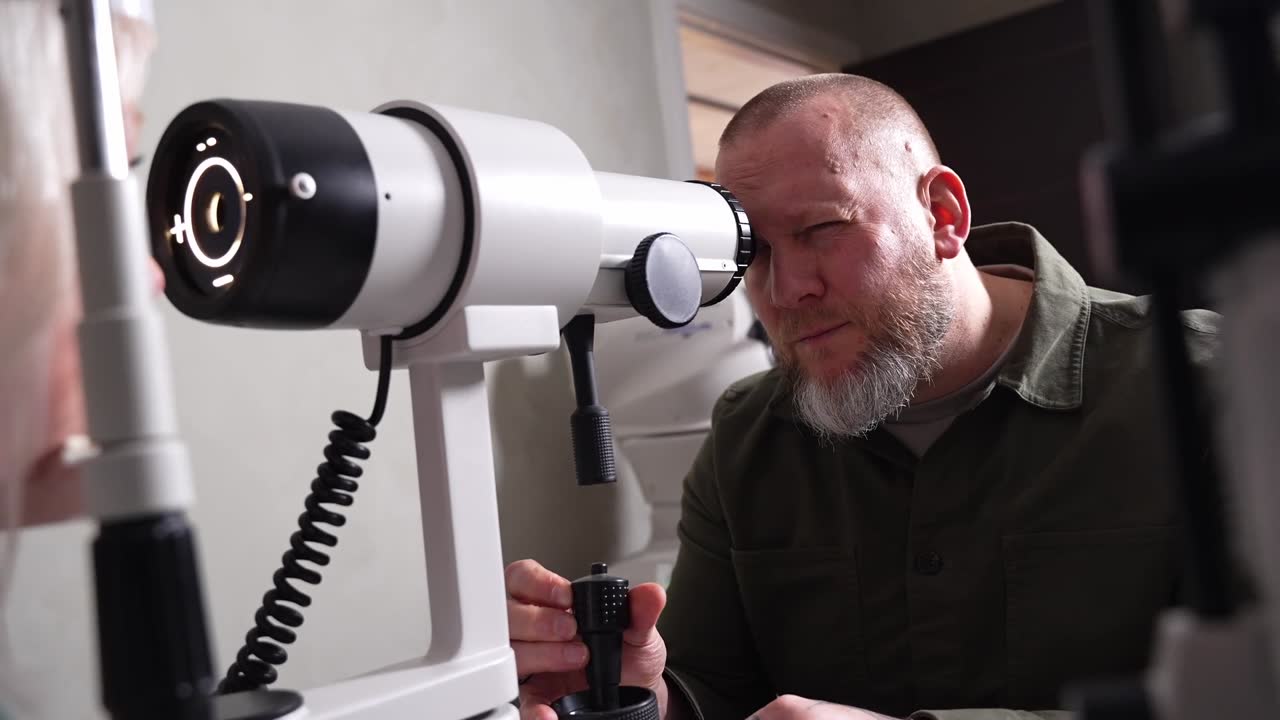
Dispensing is the least visible part of what an optician does and one of the most consequential. It is the work of turning a prescription and a chosen frame into a pair of glasses that sits correctly on a particular face. Done well, you never think about it. Done poorly, you think about it every afternoon at four o’clock.
Before the lenses are ordered
The frame goes on your face and is adjusted to sit correctly first — not afterwards. Every measurement that follows depends on where the frame actually sits, so adjusting it after the lenses are glazed means the lenses were calculated for a position the frame is no longer in.
What is measured, and why each one matters
- Monocular pupillary distances — measured per eye, because faces are not symmetrical and a single averaged figure puts one lens out
- Fitting height — where your pupil sits within the chosen frame, which sets where a varifocal’s corridor begins
- Vertex distance — how far the back of the lens sits from your eye; above about four dioptres this changes the power you actually receive
- Pantoscopic tilt — the angle of the frame, typically a few degrees, which affects how the lens performs for reading
- Frame wrap — relevant in anything curved, including most sunglasses and sports frames
- Your working distances — measured with the object in your hands, at the desk you use, not assumed from a table
The frame check nobody expects
Some lens designs need a minimum depth to work. A varifocal in a frame that is too shallow has nowhere to put the intermediate zone, and the result is a lens that technically meets the prescription and practically does not work. A dispensing optician should tell you this before you commit to the frame, even when it is the frame you have fallen for — and should offer you the nearest thing that does work.
At collection
The lenses are verified against the prescription, the frame is refitted on your face, and you are asked to look at something near, something far, and something in between while still in the practice. Walking to a window and reading a sign is worth more than any amount of checking in a mirror. Then the frame is adjusted again, because putting glasses on and taking them off changes how they sit.
How to tell whether yours were fitted properly
- They sit level — one lens is not visibly lower than the other
- They do not slide when you look down at your phone
- The weight is on your nose and the back of your ears, not pressing at your temples
- There is no red mark after an hour’s wear
- Your pupils sit near the horizontal centre of the lens
- You are not tilting your chin to read something at arm’s length
And afterwards
Frames move. Adjustments are part of owning glasses rather than a sign that something went wrong, and they take a few minutes. We do not charge for them, and we do not mind whether we supplied the glasses. If something feels off, there is usually a findable reason.
A prescription tells us what your eyes need. The fitting decides whether your eyes ever receive it.← Back to the Journal