Microsuction is now widely regarded as the safest and most comfortable way to remove ear wax, and it is the method used by ear-care professionals and NHS ENT departments alike. If you are wondering whether it is safe, the short answer is: in trained hands, very. Here is how it works, why it is gentler than the older approaches, and what to expect.
What microsuction actually is
Microsuction removes wax using gentle suction, under magnification, with no water involved. Your clinician wears a headlight and magnifying loupes (or uses a microscope) to see right into the ear canal, then uses a fine, low-pressure suction device to lift the wax away. Because we can see exactly what we are doing throughout, it is a precise, controlled procedure rather than a flush-and-hope.
Why it is considered safer than syringing
Older methods such as ear syringing or irrigation push water into the ear to flush the wax out, without the clinician being able to see the canal during the process. Microsuction is different in the ways that matter for safety:
- The clinician sees the ear canal clearly throughout, rather than working blind
- No water is introduced into the ear, which lowers the risk of infection
- It is generally suitable for people who cannot have irrigation — including those with a perforated eardrum, grommets, or a history of ear surgery or infections
- It is quick, and most people find it comfortable
This is why microsuction has largely become the preferred method for professional wax removal.
What to expect during the procedure
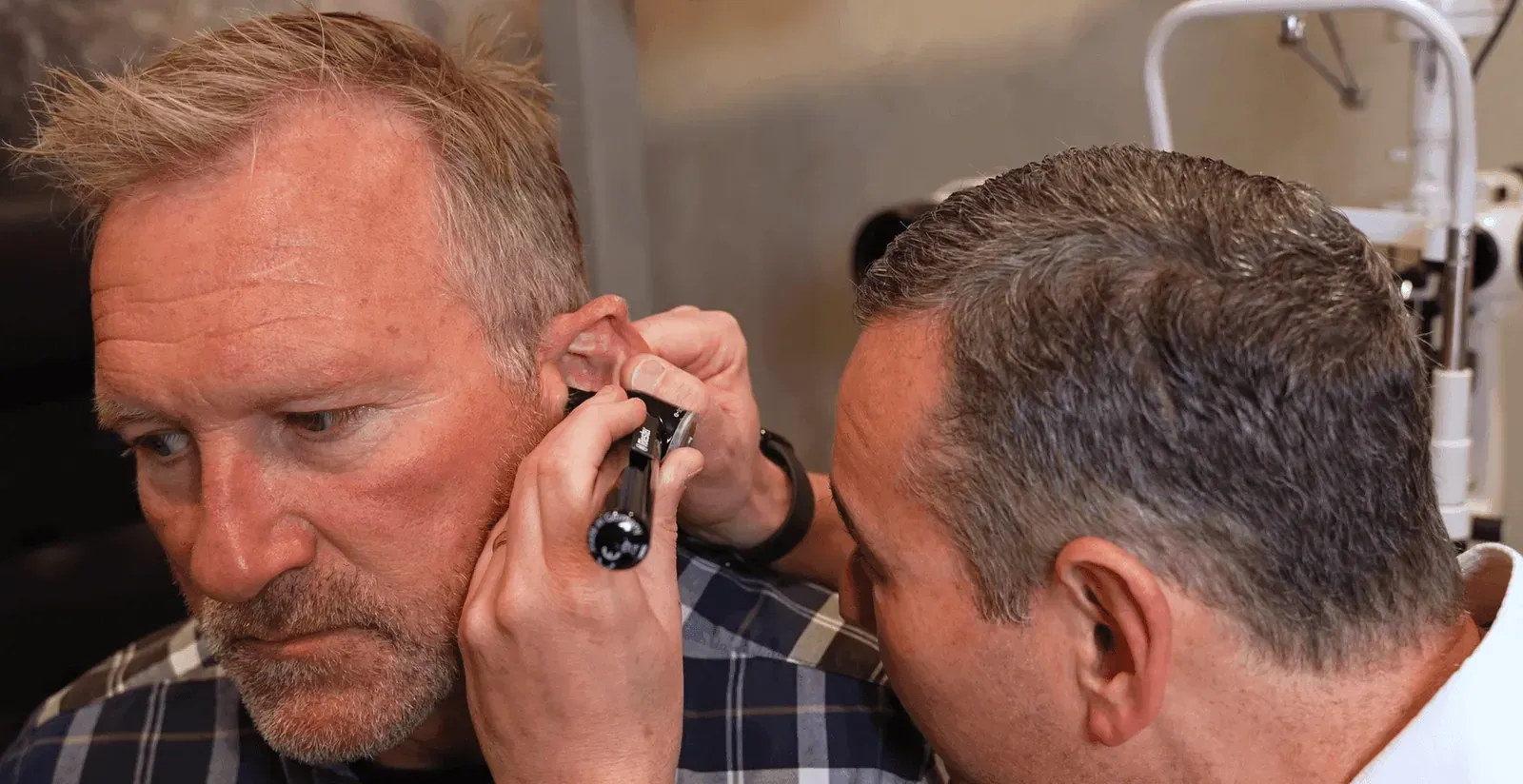
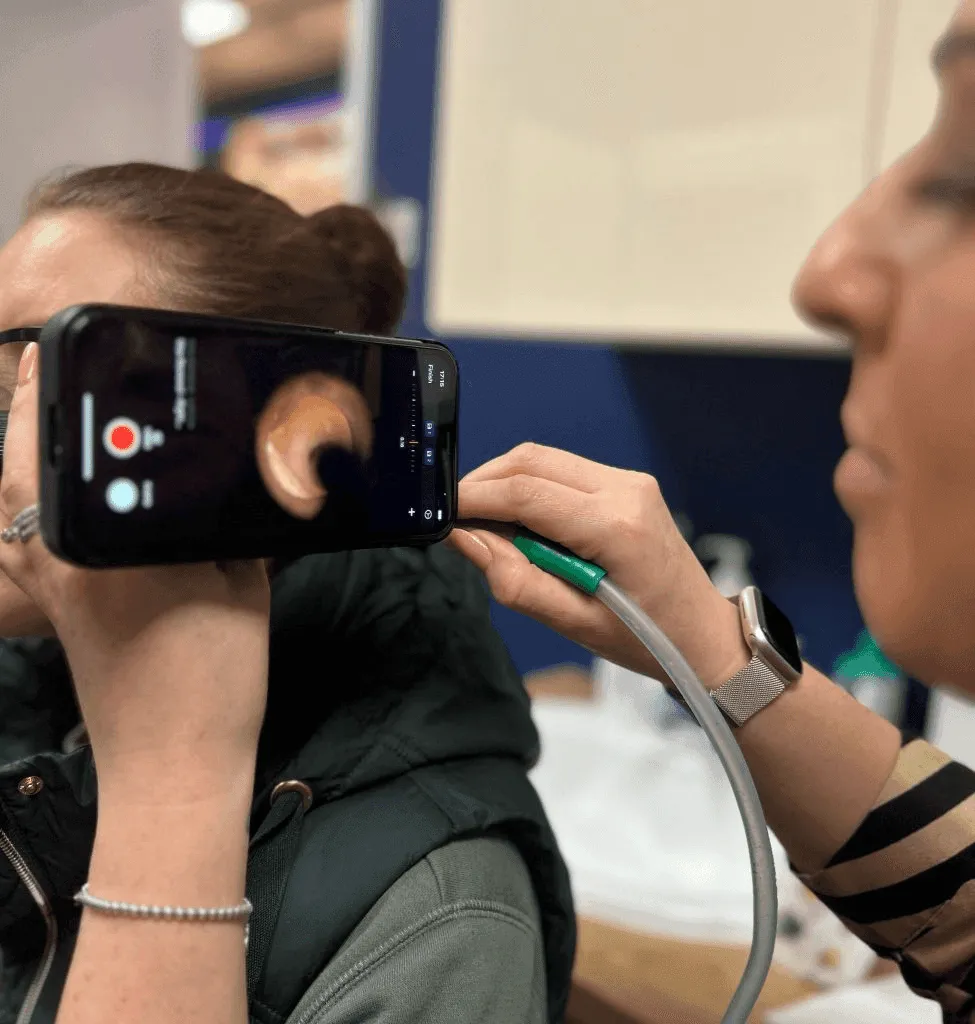
The appointment is calm and straightforward. We start by asking about your ears and your history, then look inside with a video otoscope so you can see the wax too. The suction itself takes only a few minutes per ear. A few sensations are completely normal and nothing to worry about:
- The suction can sound loud while it is near the eardrum — this is normal and brief
- You may feel a slightly cool sensation or a mild tickle
- Occasionally people feel momentarily dizzy, which passes quickly
None of it should be painful. If anything feels uncomfortable, you simply tell us and we pause — you are always in control.
Please do not try to remove wax yourself
A little wax is healthy and self-cleaning, and the ear is a delicate, self-maintaining system. Trying to dig it out tends to cause more problems than it solves:
- Cotton buds usually push wax deeper and can damage the canal or eardrum
- Ear candles do not work and can cause burns and blockages — they are best avoided entirely
- Over-cleaning can irritate the canal and actually trigger more wax
If wax is genuinely causing problems, having it removed properly is far safer than any home method.
When wax is worth removing — and when to seek help
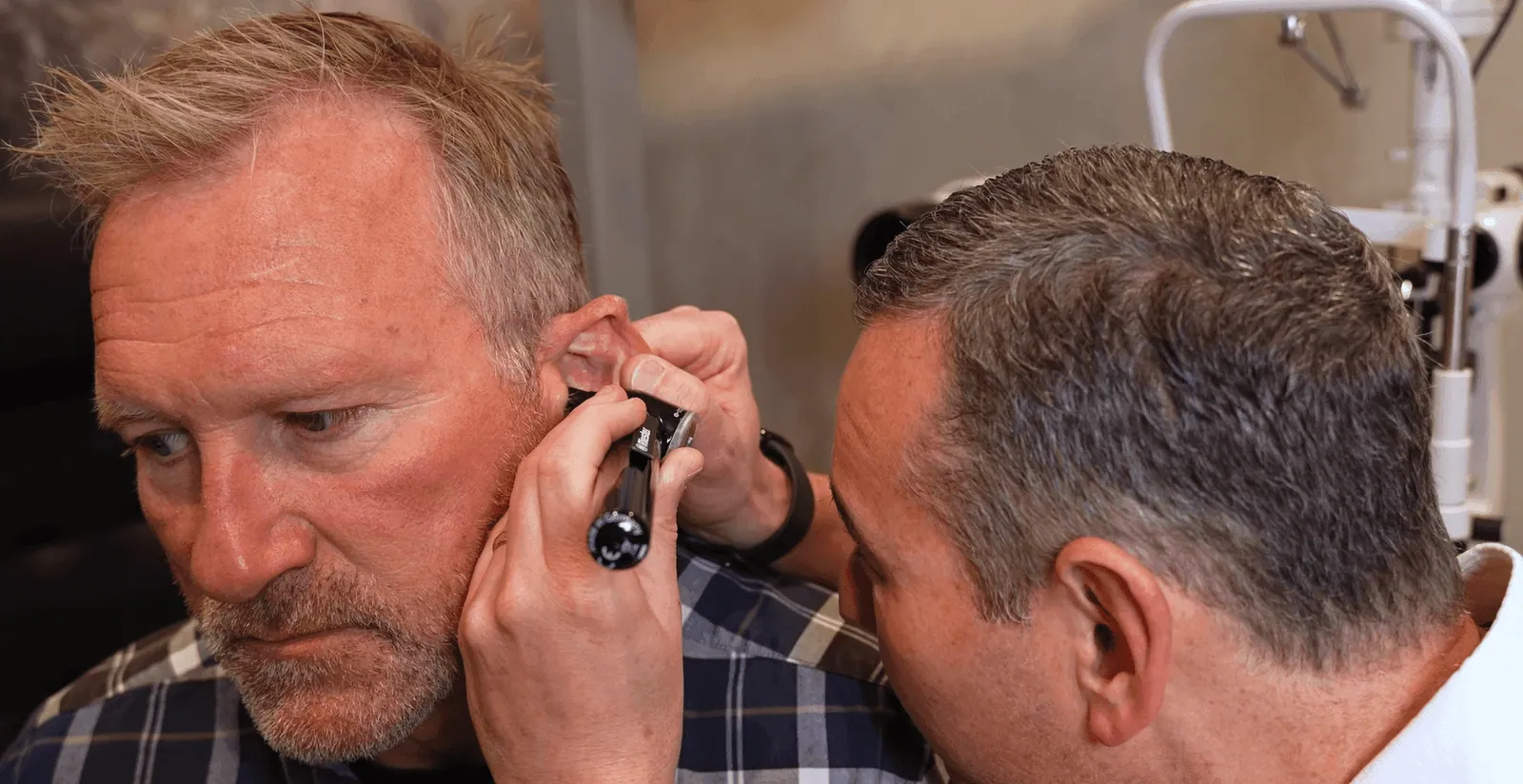
Wax only needs removing when it is causing symptoms — such as dulled or blocked hearing, earache, a feeling of fullness, ringing, or wax interfering with a hearing aid. Please do seek advice promptly, rather than assuming it is “just wax”, if you have significant ear pain, discharge, sudden or one-sided hearing loss, or dizziness, as these can point to something that needs attention. A quick look with an otoscope tells us whether wax is the issue and whether microsuction is the right step.
What we do at STOTTS.
Our ear wax removal is carried out by trained professionals using microsuction, with a proper look inside your ears first. If we find that your difficulty is not simply wax, we can move straight on to a full hearing assessment — complimentary at STOTTS. — so nothing is missed. Safe, gentle and unhurried, with your comfort leading the way.
In trained hands, microsuction is a safe, gentle and precise way to remove ear wax — and far kinder to your ears than any cotton bud or home remedy.
Sources
- NHS — Earwax build-upnhs.uk
- NICE CKS — Earwax: managementcks.nice.org.uk
- RNID — Ear wax build-uprnid.org.uk