

Most people settle into new varifocals within a few days, and many feel comfortable almost straight away. Others take a little longer — a couple of weeks is not unusual. There is no single, fixed adjustment period, because so much depends on your prescription, the lens design and how consistently you wear them. What matters is that things should steadily improve — and if they do not, that is worth checking rather than enduring.
Why varifocals feel different at first
A varifocal asks your eyes and brain to learn a new habit. Instead of one prescription across the whole lens, there are three zones blended together, and you learn to find the right one by moving your head a little. That is completely normal, and it settles quickly for most people. Early on you might notice:
- Getting used to the multiple viewing zones
- New head and eye movements to find the right part of the lens
- A little softness towards the lower edges (peripheral distortion)
- Judging stairs and kerbs needing a bit more care at first
- The change from single-vision lenses, if that is what you had before
- A frame that needs settling in, or fine-tuning of the fit
- Any change in your prescription itself
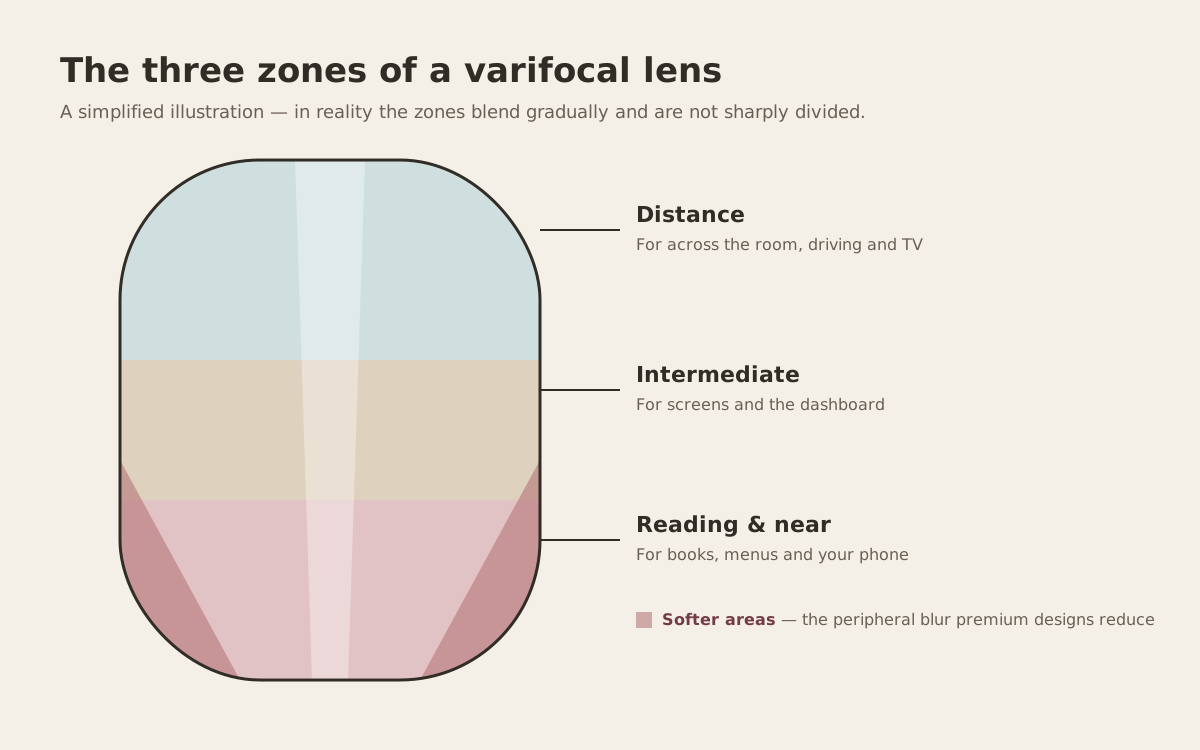
What is normal in the first few days
In the settling-in period it is normal to be a little more aware of your glasses than usual: finding the reading zone by dropping your gaze, moving your head slightly to sharpen something to the side, or taking stairs with a touch more care. These sensations should ease day by day as it becomes second nature. Consistent wear is what turns a conscious effort into an automatic one.

Practical ways to settle in faster
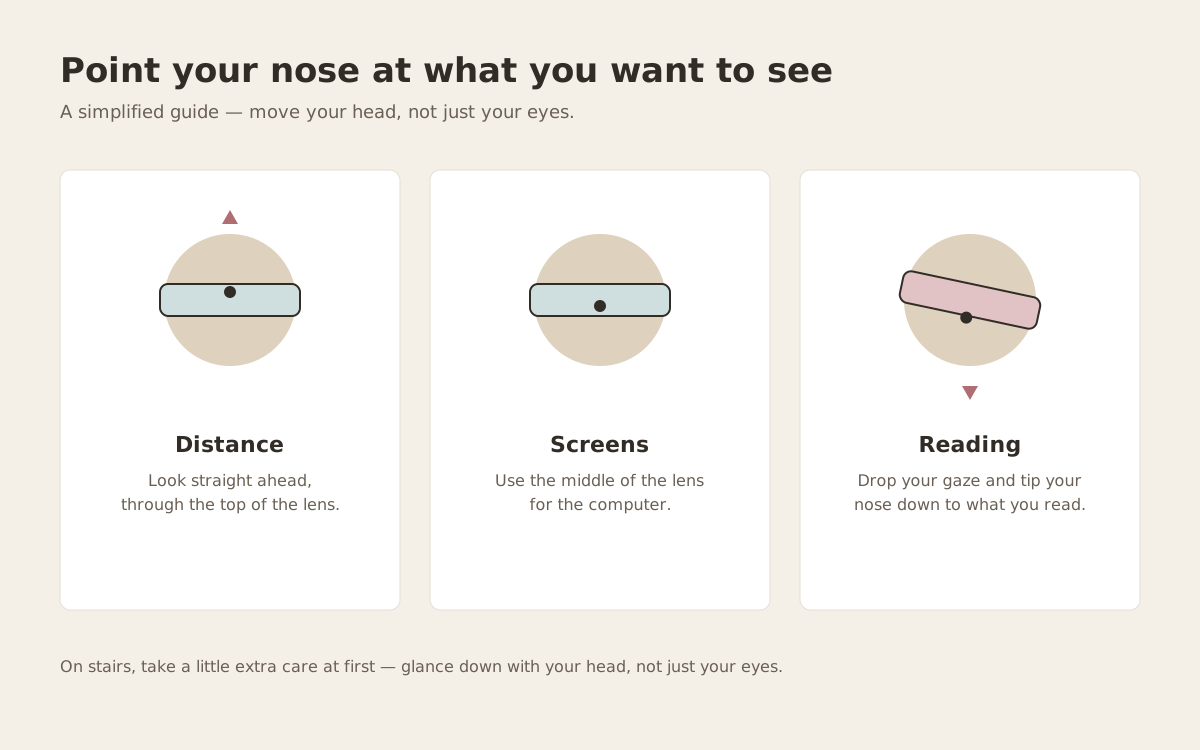
A few simple habits make adaptation much quicker and easier:
- Wear them consistently from the start rather than only now and then
- Point your nose at what you want to see, so you are looking through the right zone
- Move your head rather than swivelling only your eyes to the side
- Drop your gaze and use the lower part of the lens for reading and your phone
- Take a little extra care on stairs at first — tip your head down to look at your feet, not just your eyes
- Resist switching back to your old glasses, which slows the learning down
When your glasses should be checked
Settling in should feel like steady improvement. It should not feel like persevering with something that is not working. Please come back and let us check them — you do not need to struggle on — if you notice any of the following:
- Persistent blur that is not improving
- Headaches
- Dizziness
- One eye feeling significantly less clear than the other
- Needing to tilt your head a lot to see clearly
- The reading area feeling too high or too low
- Vision that simply is not improving with consistent wear
- Glasses that slip or sit unevenly on your face
None of these mean you have “failed” to adapt. They usually mean something in the lens or the fit needs a small adjustment — and that is exactly what we are here for.
What may need adjusting
When varifocals do not feel right, it is almost never the wearer’s fault. More often it is something quite fixable, such as:
- The frame fit — how it sits on your nose and ears
- The accuracy of the prescription
- The lens measurements — where the zones sit relative to your eyes
- The lens design, if it does not suit how you use your eyes
- The frame depth, if there is too little room for the reading zone
- The pantoscopic angle and position — the tilt and height of the frame on your face
What STOTTS. checks when varifocals do not feel right

If your varifocals are not settling, we start by listening to exactly what feels wrong and when. Then we check the frame fit and how it sits on your face, re-take the measurements to make sure each zone lines up with your eyes, review the prescription, and consider whether the lens design suits your daily needs. Small changes — a tweak to the fit, a re-position, or a different design — often make all the difference. If a remake is the right answer, we will sort it. You should never feel you simply have to live with glasses that do not work.
Adjusting to varifocals should feel like steady progress, not a battle. If it does not, come back and let us check them — that is part of the service, not an imposition.← Back to the Journal