A new kind of care experience — vision, hearing and confidence, considered around you. Book an appointment →
Book Appointment

Lenses · Sun and changing light

Prescription sunglasses or Transitions? It depends on where the light finds you.

Indoors-and-out all day, or long hours in real sun — the answer changes.

This is a guide, not an eye test — any change in your vision is an examination first.

Most people asking this question have already decided they want one answer. The honest position is that there are four, they behave very differently, and the thing that separates them is not quality — it is where you are when the light gets difficult. Someone in and out of a building twenty times a day needs something different from someone who spends Saturday on open water. So rather than rank them, here is what each one actually does, in the manufacturer’s own words, with the awkward parts left in.

The honest matrix

Five options, and what the guide actually says about each.

Quoted from the Nikon Lenswear Dispensing Guide 2026. We use the manufacturer’s own descriptions rather than our own adjectives, and we keep the footnotes attached.

Everyday lenses that react to light

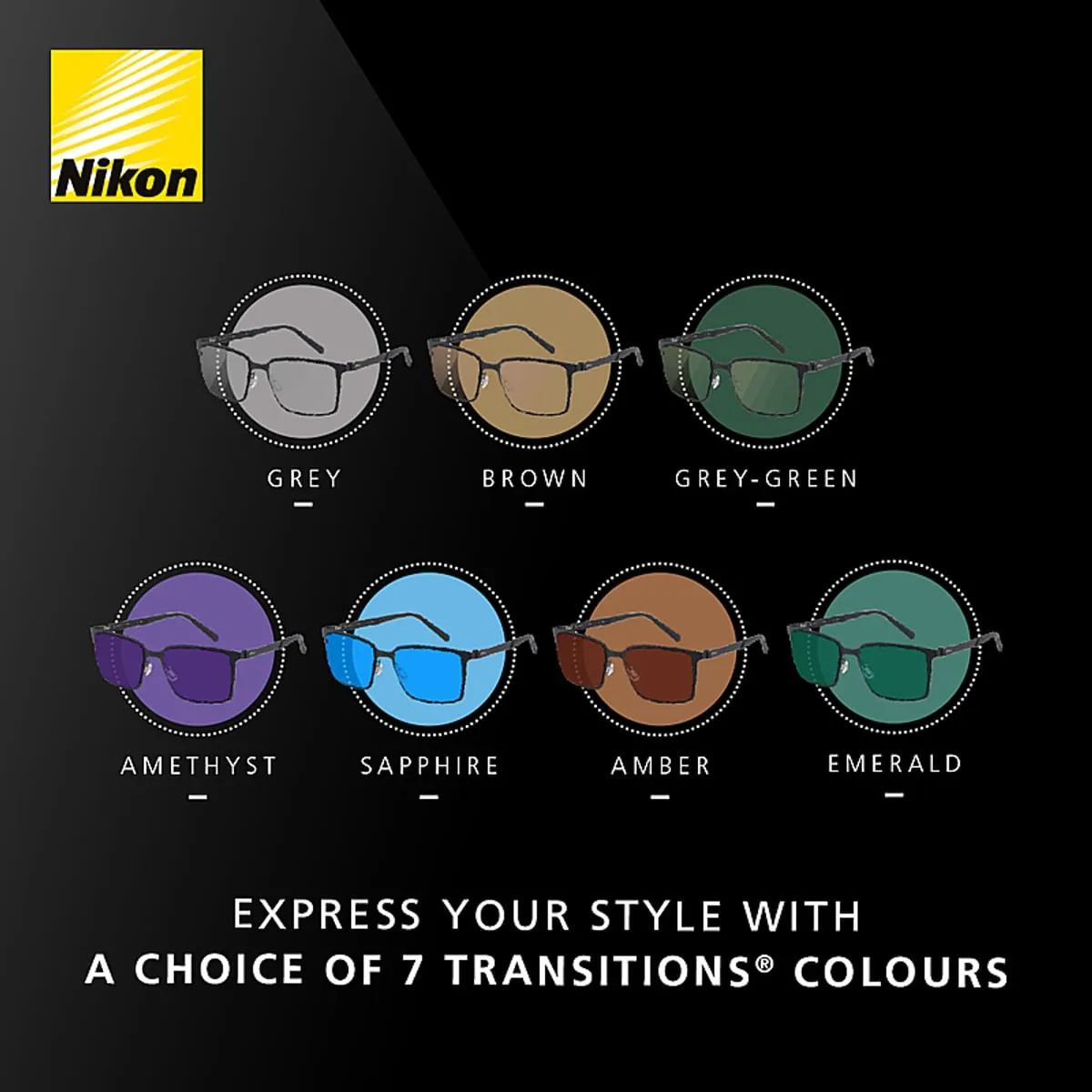
Transitions GEN S

  • “fully clear indoors”
  • “darkens in seconds”
  • “ultra-responsive to light”

Where it fits: In and out of buildings all day, and you would rather not carry a second pair.

Clear when you come back in, which is what most people are really asking about.

Reactive — darkens in the car too

Transitions XTRActive

  • “the darkest in the car”
  • “activates in the car”
  • “clear indoors with a hint of tint”

Where it fits: Bright daylight and low sun on the drive, where an ordinary reactive lens stays clear behind the glass.

The hint of tint indoors is the trade — worth weighing if you drive in the evening.

Reactive and polarised outdoors

Transitions XTRActive Polarized

  • “up to 90% polarisation efficiency”
  • “activates in the car”
  • “clear indoors with a hint of tint”

Where it fits: Glare off bright surfaces outdoors when you also want one everyday pair.

Behind a windscreen the guide states polarisation efficiency is 30%, which is not classified as polarised. We say that before the choice, not after.

A dedicated sun pair, fixed tint

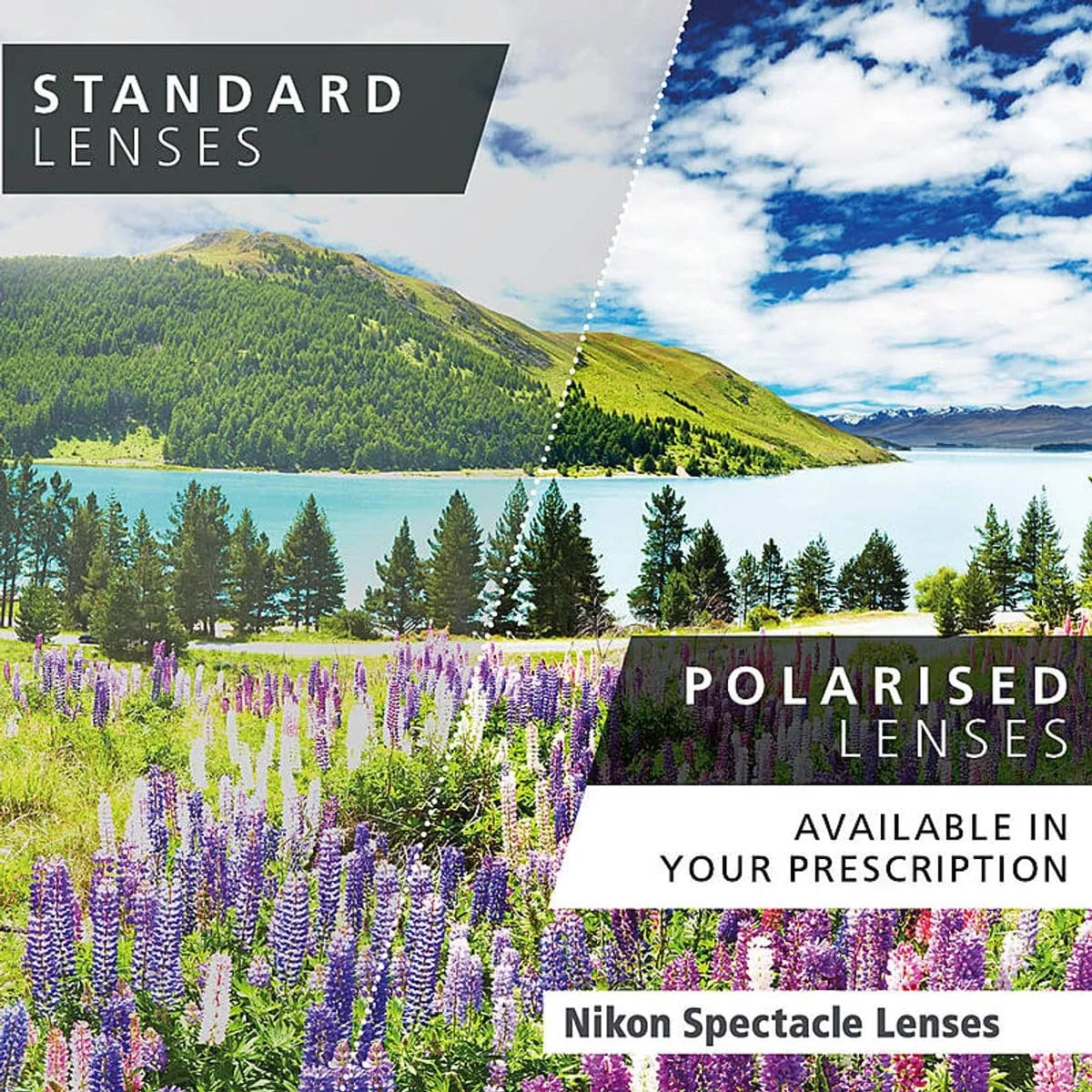
Polarised prescription sun

Where it fits: Long hours in real sun — water, open road, grass, the coast — where you want the glare handled properly.

A fixed tint does not clear when you walk indoors. It is a second pair, and we treat it as one.

A subtle indoor tint that reacts outdoors

Transitions Color Touch

Where it fits: A cosmetic choice rather than a driving one.

The guide states plainly: “Transitions Color Touch lenses are not suitable for driving in twilight or at night.” Nothing tinted indoors is ever configured for a night driver.

Lens technology: Nikon Lenswear. Configuration: STOTTS.

The decision, in order

Where does the light find you? That is the whole question.

These are the branches the Lens Profile walks when you tell it about your outdoor life. Each one carries its own reason and its own limit.

  1. 01

    Outdoors most days, and glare off water, road or grass gets in the way

    A polarised sun pair

    When you are outdoors a lot, squint or reach for non-prescription sunglasses, and do not already own prescription sunglasses you use, the profile points at dedicated polarised prescription sun rather than asking an everyday lens to do it.

    Coating chosen for a reason you gave us — polarised sun lenses take an anti-reflection coating on the back surface only

  2. 02

    You are in and out of buildings a lot, or you would simply like your everyday glasses to react to light

    Transitions GEN S

    This is the indoors-and-out answer. In the guide’s words the lens is “fully clear indoors” and “darkens in seconds” — which is the part people actually notice.

    Everyday reactive (Transitions GEN S): not a night-driving solution in itself; that is a separate coating conversation.

  3. 03

    Bright daylight and low sun make driving harder

    Transitions XTRActive

    This is the option the guide calls “the darkest in the car”, because it activates behind the windscreen where an ordinary reactive lens stays clear.

    Reactive that darkens in the car (XTRActive): not fully clear indoors — the guide describes it as "clear indoors with a hint of tint" — which is worth weighing against evening driving.

  4. 04

    Glare gets in the way and you drive

    Transitions XTRActive Polarized

    Stated first: Reactive and polarised (XTRActive Polarized): behind a windscreen the guide states polarisation efficiency is 30%, which is not classified as polarised — so this is not a substitute for dedicated polarised sunglasses when driving.

    Outdoors the guide describes “Less glare with up to 90% polarisation efficiency”. That is a real difference on open water and wet tarmac — but the windscreen fact above is the one that decides whether it replaces a sun pair. It does not.

It depends on where the light finds you. Indoors-and-out all day points at everyday lenses that react to light; long hours in real sun or glare off water, road or grass points at a polarised sun pair. Many people end up with both — decided with you.

The limits, kept attached

What each one will not do.

These are the Lens Profile’s own lines, written into every light recommendation it makes. They are not small print we hide at the bottom of a consultation — they are the reason the recommendation is trustworthy.

  • Reactive that darkens in the car (XTRActive): not fully clear indoors — the guide describes it as "clear indoors with a hint of tint" — which is worth weighing against evening driving.
  • Reactive and polarised (XTRActive Polarized): behind a windscreen the guide states polarisation efficiency is 30%, which is not classified as polarised — so this is not a substitute for dedicated polarised sunglasses when driving.
  • Everyday reactive (Transitions GEN S): not a night-driving solution in itself; that is a separate coating conversation.

And a dedicated sun pair: a fixed tint does not clear when you come indoors — that is what makes it a second pair rather than a swap. Coating chosen for a reason you gave us — polarised sun lenses take an anti-reflection coating on the back surface only

A pair of spectacles photographed in changing daylight, the lenses part-darkened
Imagery: Nikon Lenswear

Two layers, one pair

How STOTTS. Light and STOTTS. Drive sit together.

STOTTS. Light

For bright, changing and outdoor light — everyday lenses that react to light, or prescription sun, chosen for the light you actually live in.

Transitions GEN S, Transitions XTRActive or Transitions XTRActive Polarized from Nikon Lenswear, or polarised prescription sun lenses — each named with its own reason.

What is in the configuration

  • Your Lens Profile, checked against your prescription in practice
  • Prescription validated — bring your current glasses
  • The light layer chosen for the reason you gave us
  • Reactive everyday lens or a dedicated sun pair — decided with you
  • Driving check stated before the choice: behind a windscreen polarisation is 30%, not classed as polarised
  • Colour and depth chosen in practice from what the design and index allow
  • Frame dimensions and fitting heights measured for the design
  • Coating chosen for a reason you gave us — polarised sun lenses take an anti-reflection coating on the back surface only
  • Fitting review after you collect — adjusted or put right if needed

STOTTS. Drive

For people who drive a lot, and after dark — glare managed by the coating, on the pair you actually drive in, or on a dedicated driving pair when the wardrobe conversation says one is worth it. Drive is a light-layer configuration: the lens design underneath is whatever your everyday configuration is.

Nikon SeeCoat Next Drive coating — on your everyday design. No driving-specific lens design exists in the guide and none is implied.

The honest limit

  • A coating cannot fix distance clarity — if road signs are the issue, that is a prescription check first.

Whether both can live on the same pair is a practice check, not an online promise. Coating compatibility with the lens and any light layer already on it — that is a decision we make with the lens, the index and the light layer in front of us, and we will tell you in practice if a combination is not available rather than name it here.

Lens technology: Nikon Lenswear. Configuration: STOTTS.

Prescription sunglasses worn outdoors in strong daylight
Imagery: Nikon Lenswear

When the answer is two pairs

Sometimes one lens cannot be in two places.

If your day is genuinely split — a lot of indoor-and-out, and separately a lot of real sun — then a reactive everyday lens and a polarised sun pair are doing two different jobs, and asking one of them to do both is where people end up disappointed. It depends on where the light finds you. Indoors-and-out all day points at everyday lenses that react to light; long hours in real sun or glare off water, road or grass points at a polarised sun pair. Many people end up with both — decided with you.

We would rather say that plainly, and we would rather you knew the cost before you decide it is worth it.

A complete second pair starts from £99 for single vision and £199 for a varifocal; members save 20% on complete eyewear and 50% on an additional complete pair within 90 days.

Those are the only figures we publish here. We do not quote lens prices online, because the design, index and light layer are settled with you in practice and a number without those decisions behind it would be a guess.

The honest negative

When we would say you do not need any of this.

Prescription sunglasses — “You're not outdoors much and bright light doesn't trouble you.”

That is the Lens Profile’s wording, word for word, when your answers do not earn a sun option. It also says the same thing if you already own prescription sunglasses you actually use — we would review those rather than sell you another pair. A recommendation only means something if the same tool is willing to give you the opposite one.

Keep — no new configuration: When nothing you told us earns a change: your current set-up, kept, with what is working said out loud. That is a real answer, not a soft one.

Sun, glare and changing light — answered straight.

Prescription sunglasses or lenses that react to light?

It depends on where the light finds you. Indoors-and-out all day points at everyday lenses that react to light; long hours in real sun or glare off water, road or grass points at a polarised sun pair. Many people end up with both — decided with you.

Do reactive lenses work in the car?

The guide describes Transitions XTRActive as the darkest in the car and Transitions GEN S as fully clear indoors. For polarisation, the guide states that behind a windscreen efficiency is 30%, not classified as polarised — so the profile says that before the choice, not after.

Is this a coating or a lens?

A light layer — reactive lenses or a sun tint — on whatever lens design your everyday configuration calls for. The coating conversation is separate and has its own reason.

Can lenses that react to light be my night-driving answer?

No — and the Lens Profile says so in its own words: “Everyday reactive (Transitions GEN S): not a night-driving solution in itself; that is a separate coating conversation.” Glare after dark is a coating conversation on the pair you actually drive in, and no tinted-indoors lens is ever configured for a night driver. If road signs rather than headlights are the problem, that is a prescription check first.

STOTTS. Lens Profile

Tell us where the light finds you.

Three minutes about your day — outdoors, in the car, in and out of buildings — and we will show you which light option we would discuss, which one we would not, and whether the honest answer is two pairs or none.

This is a guide, not an eye test — any change in your vision is an examination first.

Book appointment