
When your hearing suddenly seems dulled in one ear, it is natural to wonder what is behind it. Very often the answer is simple — a build-up of ear wax that is easily removed. But sometimes a muffled ear is the first sign of a change in your hearing itself. The honest truth is that the two can feel remarkably similar, and it is genuinely difficult to tell them apart without examining the ears and checking your hearing. Here is what tends to point each way — and why a proper look settles it.
What wax blockage tends to feel like
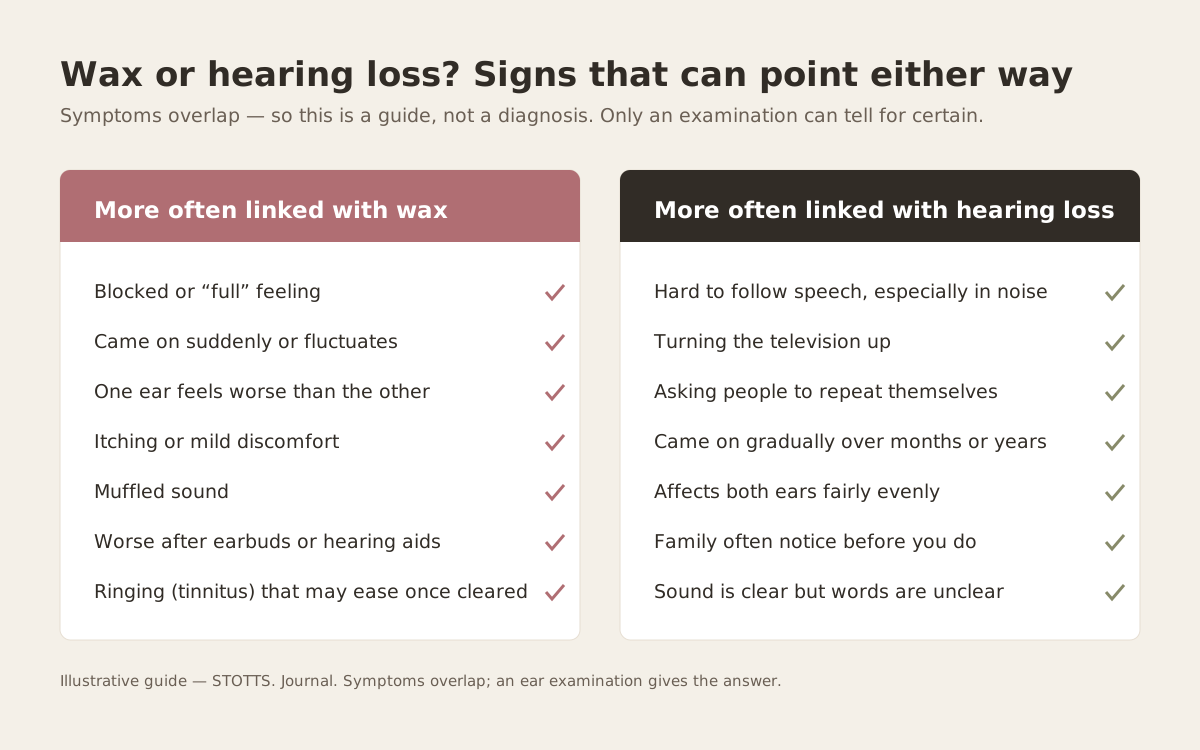
Wax build-up usually announces itself fairly clearly. The classic signs are a sense of fullness or pressure, a blocked or "underwater" feeling, and hearing that is dulled rather than distorted. It often affects one ear more than the other, can come on over a few days, and may be accompanied by mild itching, a slight earache or even a ringing sound. Crucially, the change frequently arrives quite suddenly — one morning the ear simply feels stopped up.
- A feeling of fullness, pressure or blockage
- Sound that is muffled, as though through cotton wool
- Often worse in one ear than the other
- A relatively sudden onset over hours or days
- Sometimes ringing, itching or a mild ache

What genuine hearing loss tends to feel like
Age-related hearing change is usually the opposite of sudden. It creeps in gradually, over months or years, and typically affects both ears fairly evenly. Rather than a blocked sensation, people describe sounds as clear but harder to make out — particularly speech in background noise, or higher-pitched voices. You can hear that someone is talking; you just cannot quite catch the words. Turning the television up, asking people to repeat themselves and struggling in busy rooms are the everyday hallmarks.
The quick rule of thumb
As a general guide: a sudden, blocked, muffled feeling in one ear points towards wax, while a gradual loss of clarity in both ears — especially for speech in noise — points towards a change in hearing. But it is only a guide. Wax and hearing change can happen together, and the only reliable way to know is to have the ear looked at properly.
The good news is that telling the two apart takes minutes. We look inside the ear, and the picture is usually clear straight away.
Why the symptoms overlap
Part of what makes this so confusing is that wax itself can cause several symptoms people associate with hearing loss. A build-up can bring on ringing in the ear (tinnitus), a temporary reduction in hearing, a blocked or full sensation and general discomfort. So it is entirely possible to have all the “hearing loss” warning signs and simply have an ear full of wax — and equally possible to clear the wax and find a genuine hearing change underneath. Neither is something you can reliably judge from the outside.
Please do not poke about at home
It is tempting to try to clear a blocked ear yourself, but cotton buds, hairpins, ear candles and other objects should never be pushed into the ear. They tend to press wax deeper, can scratch the delicate canal and may damage the eardrum. As a rule, nothing smaller than your elbow belongs in your ear. If wax is bothering you, softening drops such as olive oil can help in the short term, and a professional can remove it safely if it does not clear on its own.
Why an examination matters

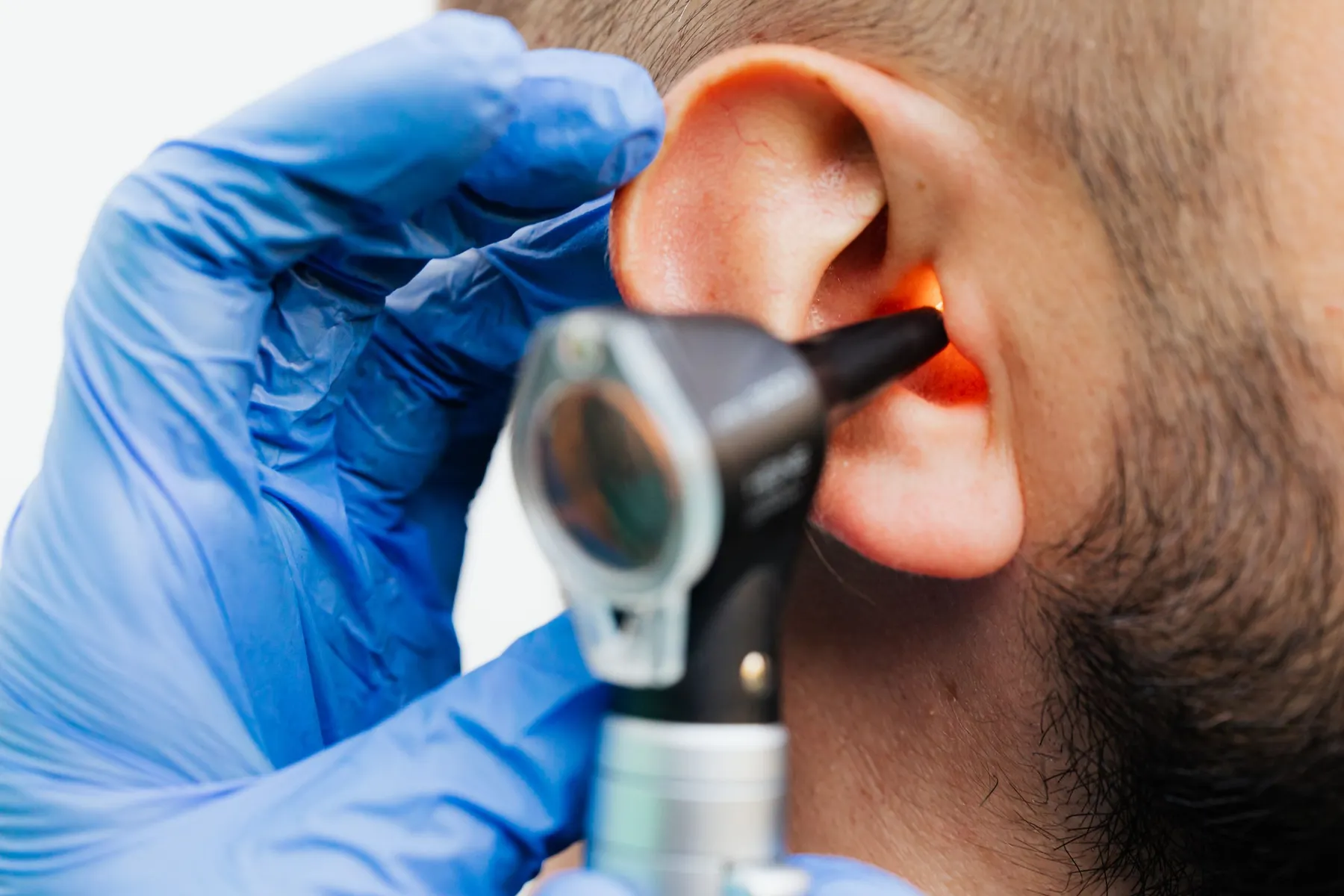
At any STOTTS. practice we examine the ear canal with a video otoscope, so we — and you — can see exactly what is there on screen. That single look usually settles the question straight away, and it means any advice that follows is based on what is genuinely there rather than a guess.
What happens if wax is found
If wax is the culprit, a gentle microsuction earwax removal appointment clears it — no water, no mess, and often with immediate relief. Many people are surprised how much brighter everything sounds afterwards.
What happens if no wax is found
If the canal is clear and your hearing still seems dulled, that is useful information in itself. A full hearing assessment then tells us what is really going on. It is also worth knowing that clearing wax can occasionally reveal a hearing loss that was already there — the wax was masking it, and removing it simply lets you notice the underlying change. That is not the removal causing a problem; it is finally seeing the full picture, which is exactly what lets us help.
When to seek urgent help
Most blocked ears are nothing to worry about. But some symptoms need prompt medical attention rather than a routine appointment. Please contact your GP or NHS 111 promptly — or seek same-day help — if you have:
- Sudden hearing loss, particularly in one ear
- Severe ear pain
- Discharge or bleeding from the ear
- Significant dizziness or loss of balance
- Any neurological symptoms, such as facial weakness or slurred speech
- An injury to the ear, or a foreign object stuck inside it
If in doubt, it is always worth asking — a quick check is far better than wondering.
← Back to the Journal