
Eyewear · Lens Configurations · Drive
STOTTS. Drive — for people who drive a lot, and after dark
Who it's for · What's in it · What powers it · What it won't do · Who it isn't for
For people who drive a lot, and after dark — glare managed by the coating, on the pair you actually drive in, or on a dedicated driving pair when the wardrobe conversation says one is worth it. Drive is a light-layer configuration: the lens design underneath is whatever your everyday configuration is.
Lens technology: Nikon Lenswear. Configuration: STOTTS.
Who it's for
The day this configuration is built around.
- Drivers who told us oncoming headlights, wet roads or dim light make driving after dark harder — or who put night drives off because of it
- Not for anyone whose difficulty is road signs or distance clarity — that is a prescription check first, and the profile routes it there
- Not for people who drive relatively little and rarely after dark
What's in this configuration
What we measure, decide and check.
- Your Lens Profile, checked against your prescription in practice
- Prescription validated — night-vision symptoms checked against a prescription or clinical change first
- Your current lens design, kept — the coating is the change
- Coating chosen for a reason you gave us — never added to raise the price
- Whether it belongs on your everyday pair or a driving pair — decided with you
- Explained and, where available, demonstrated against a standard anti-reflection lens
- No tinted-indoors lens is ever configured for a night driver
- Fitting review after you collect — adjusted or put right if needed
Your own Lens Profile lists only the parameters the design it names can actually take — a lens that has no near inset is never shown one. Source: Nikon Lenswear Dispensing Guide 2026.
Powered by
The lens technology underneath.
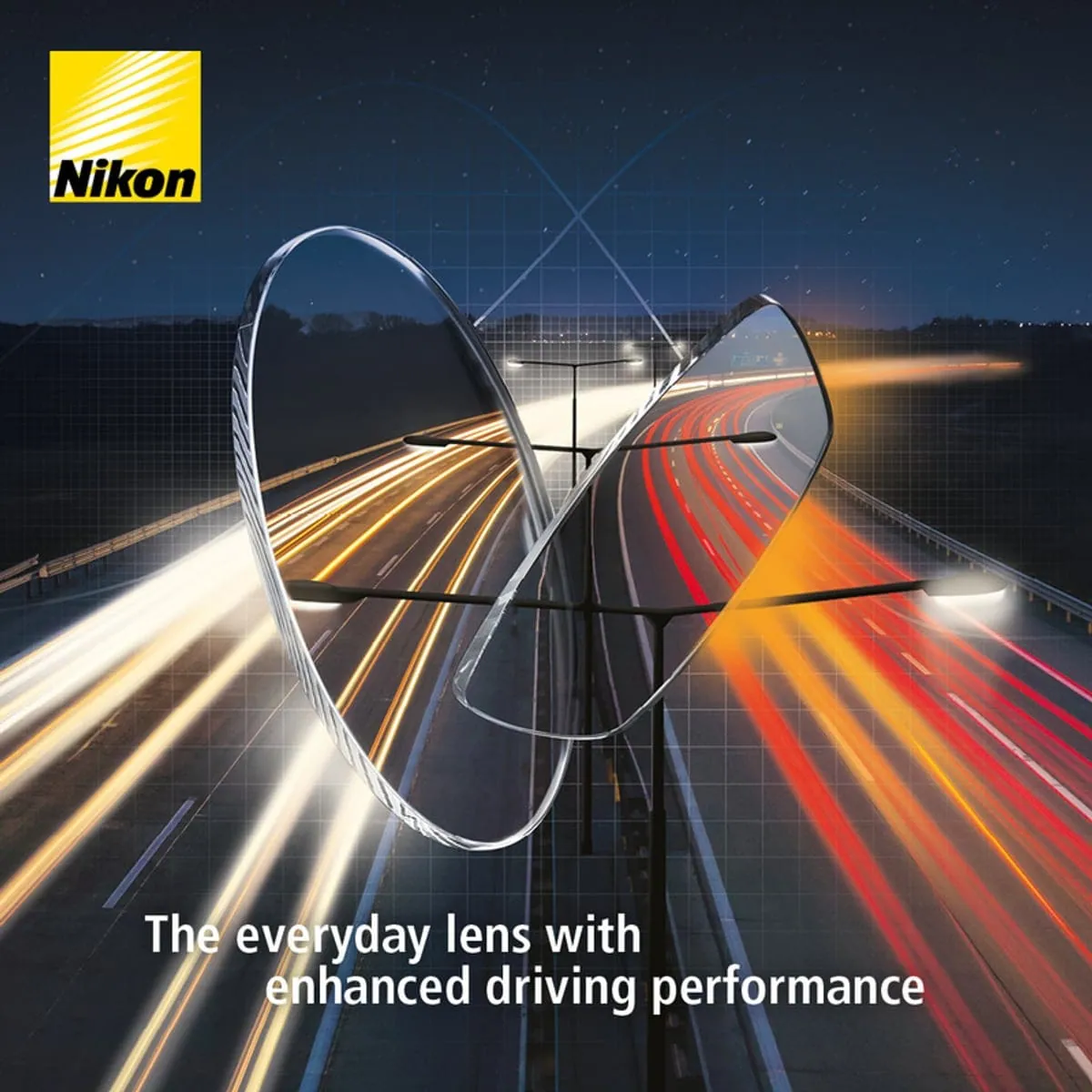
Nikon SeeCoat Next Drive coating — on your everyday design. No driving-specific lens design exists in the guide and none is implied.
Lens technology: Nikon Lenswear. Configuration: STOTTS.
The lens technology is Nikon Lenswear's and is available from other opticians. The configuration — assessment, measurements, design parameters and dispensing — is ours.
What it won't do
Said before you choose, not after.
Who it isn't for
When the profile says no.
- A dedicated driving pair You drive relatively little and rarely after dark — no separate driving pair is indicated at this stage.
How we decide
In practice, in this order.
- 01Confirm night-vision symptoms are lens-related rather than a prescription or clinical change
- 02Discuss whether this belongs on the everyday pair or a driving pair
- 03Coating compatibility with the lens and any light layer already on it
A case, in outline
A varifocal wearer with little screen time who drives most days, often after dark, and finds headlights and wet roads hard enough to avoid some evening drives. The profile names Drive — the coating is the change — and checks the prescription first.
An outline, not a promise: every configuration is confirmed against a prescription and measured in practice.
About the cost of a second pair
If it lives beside your everyday pair.
A complete second pair starts from £99 for single vision and £199 for a varifocal; members save 20% on complete eyewear and 50% on an additional complete pair within 90 days.
Drive questions.
Do anti-glare glasses for night driving work?
A coating manages reflections and glare; the guide positions SeeCoat Next Drive as ideal for those who experience glare in dim light and dark conditions. It does not change your prescription, and if road signs are the issue that is a prescription check first — which is why the profile checks that before anything else.
Is a yellow night-driving tint part of it?
No. Nothing tinted indoors is ever configured for a night driver — the guide states that Transitions Color Touch lenses are not suitable for driving in twilight or at night, and yellow tints are not part of a STOTTS. configuration.
Do I need a separate driving pair?
Often not. Drive usually lives on your everyday pair; a dedicated driving pair is a conversation, not a default — and if you drive relatively little, the profile says no separate driving pair is indicated.
Your next step
Find out if this is your configuration.
Answer the Lens Profile questions about your day and it names the configuration your answers point to — Drive or another — or says plainly that nothing needs to change. The configuration itself is assembled in practice.
A STOTTS. configuration describes what we measure, decide and check in practice around a lens; the lens technology is Nikon Lenswear's and is available from other opticians.