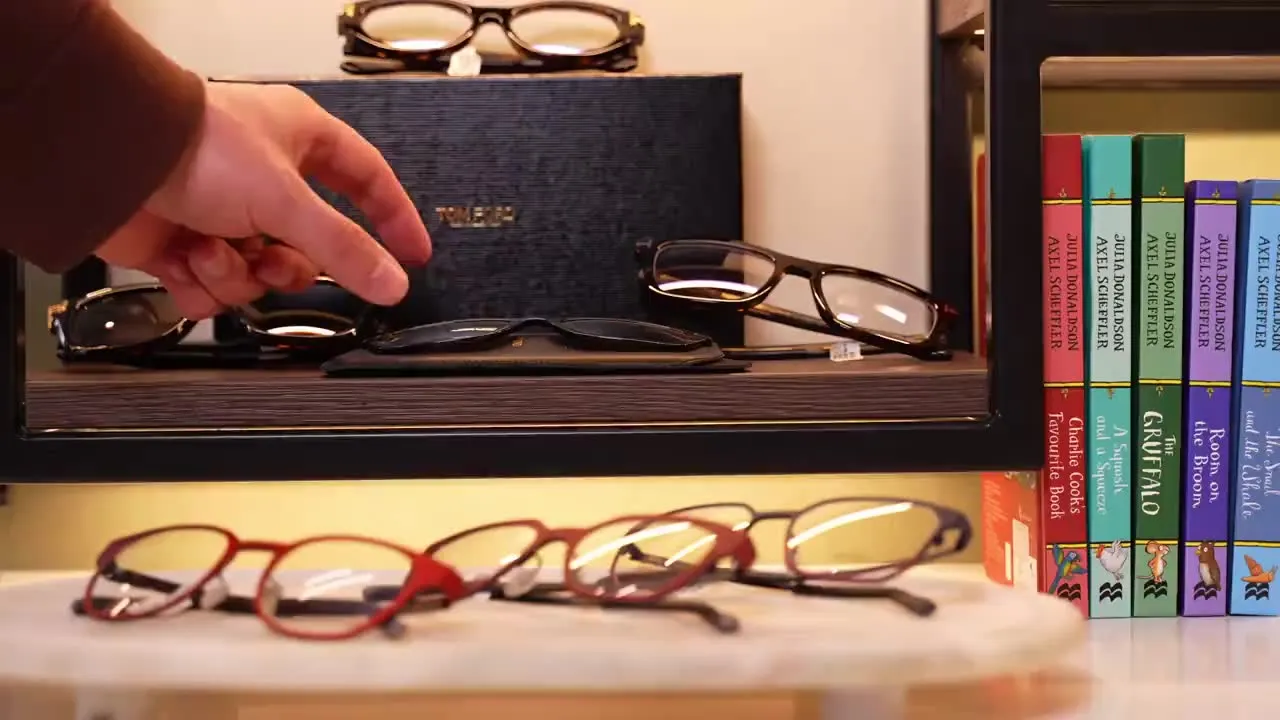

The place to start when choosing glasses is not a chart of face shapes — it is you. The right frames flatter your features, suit your colouring, work with your prescription and fit the way you actually live. Get those things right and almost any style you love can be made to work. Choosing glasses should begin with the person, not the product.
Start with you, not the frame
Glasses sit at the centre of your face, framing your eyes — the part of you people look at most. So they are not really an accessory; they are part of how you present yourself. That is exactly why we start every choice with the person in front of us rather than a rule from a magazine. What suits you depends on far more than one measurement, and the pleasure of good styling is finding frames that feel unmistakably like you.
Face shape is only part of the picture
You will have seen the old advice: round faces need angular frames, square faces need round ones. It is a useful starting thought, but treated as a strict formula it falls apart — because your face is only one factor among many. Good eyewear styling weighs up your personality, your facial proportions, your colouring, your hair and eyebrows, the fit across the bridge and the width of your face, your prescription and lens thickness, your lifestyle and wardrobe, how confident you want to feel, and whether you want your glasses to be subtle or to make a statement. No chart captures all of that. A good stylist reads the whole person.
Why fit matters as much as looks
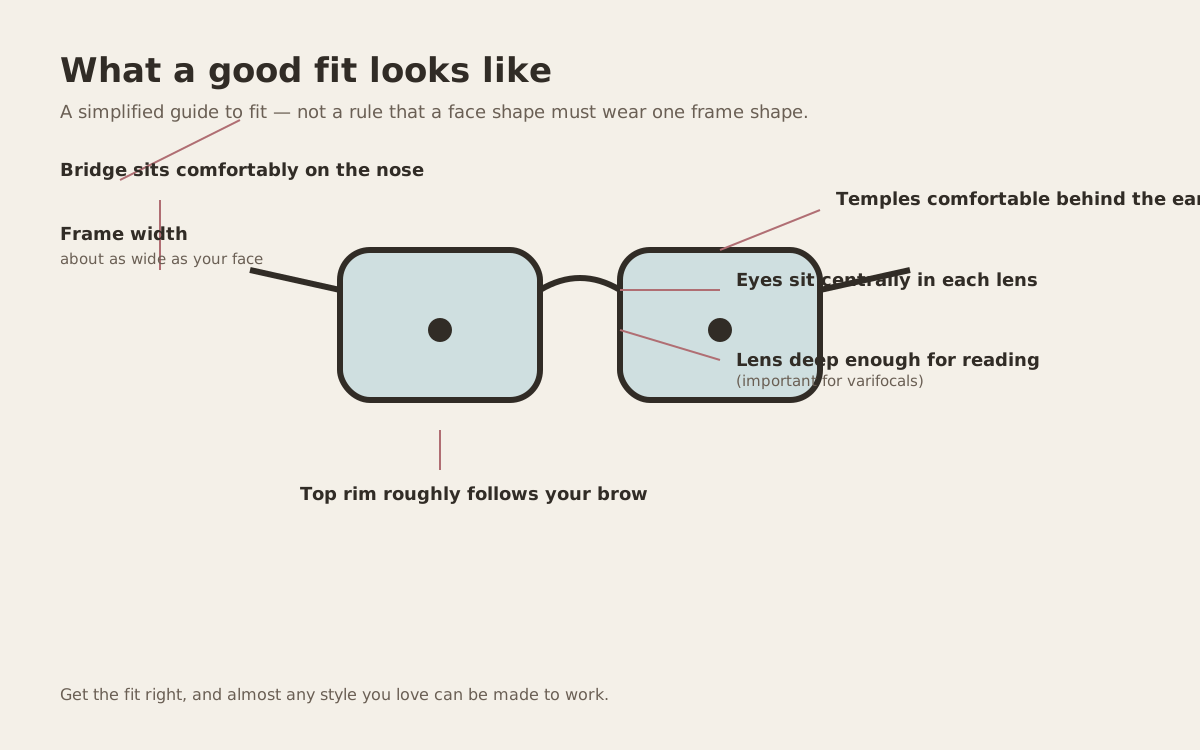
Even the most beautiful frame fails if it sits badly, and a well-fitted frame flatters far more than an expensive one that does not. We look at the frame width (roughly as wide as your face), where the bridge sits on your nose, the lens depth (enough room for reading, which matters especially for varifocals), the temple length and comfort behind your ears, whether your eyes sit centrally in the lenses, and how the top rim relates to your brow line. Fit is not a technicality tacked on at the end — it is half of what makes glasses look right.
How your prescription affects frame choice
Your prescription quietly shapes what will work. Stronger prescriptions can make lenses thicker, so a smaller, well-proportioned frame and a thinner, higher-index lens material often keep things slim and light. If you wear varifocals, the frame needs enough depth for the reading zone to sit correctly. None of this limits your style — it simply means we choose the frame and the lens together, so both look and feel their best.
Choosing colour

Frame colour sits closer to your eyes, skin and hair than almost anything else you wear, so it has an outsized effect — but it does not need rigid seasonal-colour rules. As a gentle guide, warmer tones (tortoiseshell, honey, soft golds) tend to flatter warm complexions, while cooler greys, blacks and blue-tinted frames suit cooler colouring. Your hair and eyebrows matter too. But these are starting points, not laws — the aim is harmony with your natural colouring, and sometimes a deliberate contrast is exactly what lifts a look. Trying colours on beats theory every time.
Matching eyewear to your personality
Frames can quietly say a lot, so it helps to think about the impression you want to give:
- Want to feel more confident? A slightly bolder shape or a defined colour can add presence without shouting
- Prefer understated? Rimless, thin metal or subtle acetates sit quietly and let you be the focus
- Want a statement? A distinctive shape, colour or detail becomes a signature you are known for
- Never liked yourself in glasses? That usually means the wrong fit or shape, not that glasses are “not for you” — the right pair changes minds
- Feeling overwhelmed by choice? That is exactly what a stylist is for — we narrow hundreds of frames down to a handful that genuinely suit you
- Different sides to your life? Many people love having more than one pair for different moods and moments
Matching eyewear to your lifestyle
Frames also have to fit how you spend your day. It is worth thinking about your glasses across all of it:
- Work — something polished you feel confident wearing all day and on screens
- Weekends — a more relaxed pair with a bit more character
- Driving — a good anti-reflection coating, and sunglasses that cut glare
- Screens — a comfortable fit and lenses suited to intermediate distances
- Reading — frames with enough lens depth for a settled reading zone
- Social occasions — a frame you feel genuinely good in
- Holidays — prescription sunglasses so you see and look your best in the sun
Why one pair may not do everything
A single pair rarely manages all of that — which is not a sales line, just how eyewear works. The frame that is ideal for a boardroom is not always the one you want on a beach, and the lenses that suit a desk are not the ones you would choose for driving at night. This is why so many people build a small eyewear wardrobe — an everyday pair, perhaps a bolder one, and prescription sunglasses — each doing its job well.
What happens during a styling consultation

An eyewear styling consultation takes the panic out of choosing. Rather than leaving you in front of a wall of frames, our stylists take time to understand your face, your colouring, your prescription, your lifestyle and your taste, then guide you through a carefully curated selection — narrowing it to a handful that truly work. You get honest opinions, a proper look at yourself, and the confidence of a choice made with expert help. It should feel like a pleasure, not a gamble.
The right glasses are not about obeying a face-shape rule. They are about frames that fit you properly and feel unmistakably like you.← Back to the Journal